The Winery Cuvée Jean-Paul of Languedoc-Roussillon
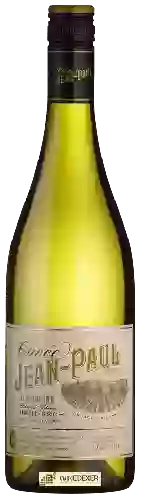
Winery Cuvée Jean-Paul
The winery offers 5 different wines
3.6


Note - 1Note - 1Note - 1Note - 0.5Note - 0
Its wines get an average rating of 3.6.
It is ranked in the top 2135 of the estates of Languedoc-Roussillon.
It is located in Languedoc-Roussillon

The Winery Cuvée Jean-Paul is one of the best wineries to follow in Languedoc-Roussillon.. It offers 5 wines for sale in of Languedoc-Roussillon to come and discover on site or to buy online.
Top Winery Cuvée Jean-Paul wines

Looking for the best Winery Cuvée Jean-Paul wines in Languedoc-Roussillon among all the wines in the region? Check out our tops of the best red, white or effervescent Winery Cuvée Jean-Paul wines. Also find some food and wine pairings that may be suitable with the wines from this area. Learn more about the region and the Winery Cuvée Jean-Paul wines with technical and enological descriptions.

The top white wines of Winery Cuvée Jean-Paul

Food and wine pairings with a white wine of Winery Cuvée Jean-Paul

How Winery Cuvée Jean-Paul wines pair with each other generally quite well with dishes such as recipes .

Organoleptic analysis of white wines of Winery Cuvée Jean-Paul

On the nose the white wine of Winery Cuvée Jean-Paul. often reveals types of flavors of pineapple, cream or grapefruit and sometimes also flavors of tropical, citrus or apples.

The best vintages in the white wines of Winery Cuvée Jean-Paul

  • 2018With an average score of 3.97/5
  • 2015With an average score of 3.67/5
  • 2016With an average score of 3.67/5
  • 2017With an average score of 3.60/5
  • 2011With an average score of 3.60/5
  • 2014With an average score of 3.50/5

The grape varieties most used in the white wines of Winery Cuvée Jean-Paul.

  • Colombard
  • Ugni blanc

Discovering the wine region of Languedoc-Roussillon

Languedoc (formerly Coteaux du Languedoc) is a key appellation used in the Languedoc-Roussillon wine region of southern France. It covers Dry table wines of all three colors (red, white and rosé) from the entire region, but leaves Sweet and Sparkling wines to other more specialized appellations. About 75% of all Languedoc wines are red, with the remaining 25% split roughly down the middle between whites and rosés. The appellation covers most of the Languedoc region and almost a third of all the vineyards in France.

The typical Languedoc red wine is medium-bodied and Fruity. The best examples are slightly heavier and have darker, more savoury aromas, with notes of spice, undergrowth and leather. The Grape varieties used to make them are the classic southern French ones: Grenache, Syrah and Mourvèdre, often with a touch of Carignan or Cinsaut. The white wines of the appellation are made from Grenache Blanc, Clairette and Bourboulenc, with occasional use of Viognier, Marsanne and Roussanne from the Rhône Valley.

The top pink wines of Winery Cuvée Jean-Paul

Food and wine pairings with a pink wine of Winery Cuvée Jean-Paul

How Winery Cuvée Jean-Paul wines pair with each other generally quite well with dishes of beef, pork or game (deer, venison) such as recipes of alsatian bäckeoffe, eggs in meurette or duck legs with honey and orange.

Organoleptic analysis of pink wines of Winery Cuvée Jean-Paul

On the nose the pink wine of Winery Cuvée Jean-Paul. often reveals types of flavors of cream, grapefruit or peach and sometimes also flavors of strawberries, raspberry or melon.

The best vintages in the pink wines of Winery Cuvée Jean-Paul

  • 2018With an average score of 3.80/5
  • 2016With an average score of 3.60/5
  • 2017With an average score of 3.60/5
  • 2019With an average score of 3.50/5
  • 2010With an average score of 3.50/5
  • 2015With an average score of 3.40/5

The grape varieties most used in the pink wines of Winery Cuvée Jean-Paul.

  • Cabernet Franc
  • Merlot
  • Tannat

Discover the grape variety: Merlot

Merlot noir is a grape variety that originated in France (Bordeaux). It produces a variety of grape specially used for wine making. It is rare to find this grape to eat on our tables. This variety of grape is characterized by small to medium sized bunches, and medium sized grapes. Merlot noir can be found in many vineyards: South West, Languedoc & Roussillon, Cognac, Bordeaux, Loire Valley, Armagnac, Burgundy, Jura, Champagne, Rhone Valley, Beaujolais, Provence & Corsica, Savoie & Bugey.

The top red wines of Winery Cuvée Jean-Paul

Food and wine pairings with a red wine of Winery Cuvée Jean-Paul

How Winery Cuvée Jean-Paul wines pair with each other generally quite well with dishes of beef, pasta or veal such as recipes of slow-cooked fillet of beef, basque lasagne or chicken bonne femme.

Organoleptic analysis of red wines of Winery Cuvée Jean-Paul

On the nose the red wine of Winery Cuvée Jean-Paul. often reveals types of flavors of cherry, earthy or blackberry and sometimes also flavors of blueberry, red fruit or tobacco.

The best vintages in the red wines of Winery Cuvée Jean-Paul

  • 2019With an average score of 3.80/5
  • 2010With an average score of 3.80/5
  • 2016With an average score of 3.70/5
  • 2017With an average score of 3.70/5
  • 2018With an average score of 3.60/5
  • 2015With an average score of 3.50/5

The grape varieties most used in the red wines of Winery Cuvée Jean-Paul.

  • Shiraz/Syrah
  • Grenache

The word of the wine: Anthocyanins

Phenolic compounds present in the skin of grapes that give colour to red wines during maceration.

Discover other wineries and winemakers neighboring the Winery Cuvée Jean-Paul

Planning a wine route in the of Languedoc-Roussillon? Here are the wineries to visit and the winemakers to meet during your trip in search of wines similar to Winery Cuvée Jean-Paul.

Discover the grape variety: Tannat

Tannat is a red grape variety from Béarn which belongs to the cotoïdes family. Present in several vineyards of France, it occupies nearly 3,000 ha. Its leaves are reddish with tan patches. Its bunches are either of normal size or larger. Its berries have a thin skin and are rounded. Its foliage has a swarthy appearance. This variety must be pruned long because it is vigorous. It likes sandy and gravelly soils. Tannat is often exposed to leafhoppers and mites. It is also somewhat susceptible to grey rot. It has 11 approved clones, including 474, 717 and 794. Once mature, this variety produces acidic, fruity, tannic, acidic and full-bodied wines. Various aromas emerge, notably tobacco, cinnamon and exotic wood. Tannat is rarely used alone. It is combined with iron-servadou to obtain a fruitier taste or with cabernet sauvignon to be more rounded.