The Winery Escalier de la Dame of Valais
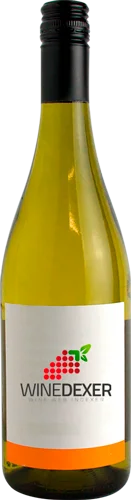
The Winery Escalier de la Dame is one of the best wineries to follow in Valais.. It offers 20 wines for sale in of Valais to come and discover on site or to buy online.
Looking for the best Winery Escalier de la Dame wines in Valais among all the wines in the region? Check out our tops of the best red, white or effervescent Winery Escalier de la Dame wines. Also find some food and wine pairings that may be suitable with the wines from this area. Learn more about the region and the Winery Escalier de la Dame wines with technical and enological descriptions.
How Winery Escalier de la Dame wines pair with each other generally quite well with dishes of shellfish, lean fish or fruity desserts such as recipes of chinese fondue, cod fillets in the oven or rice with milk.
The Valais is the largest wine region and appellation in Switzerland, responsible for around one third of the country's total wine production. The main Vineyard area covers the southeast-facing slopes of the dramatic Rhône river valley as the glacial waters run southwest between Leuk (Loeche in French) and Fully. The river changes direction at Martigny and then runs northwest to exit the valley and empty into Lac Léman (Lake Geneva).
Vineyard area here comes to around 4,800 hectares (11,800 acres) and is generally located on (often steep) slopes and terraces between the flat, fertile, Heavy soils at the bottom of the valley - often given over to fruit production, industry and urban development - and the bare rock of the mountainside that towers above.
The Valais Terroir is one of the world's most dramatic. The valley benefits from its sheltered position below the high alpine peaks, with the most obvious bonus being the fohn wind, which keeps the area unusually Warm and Dry considering its altitude (most vines grow here at between 460 and 760m - 1500-2500ft).
The fohn effect is also enjoyed by Ticino, although there, mountain weather systems bring sporadic, heavy rainfall.
Vertiginous alpine topography also gives the vines in Valais the advantage of emphasized vineyard orientation and many are planted on steep gradients of up to 90% (42 degrees).
This steepness, although making it markedly harder to manage and harvest the vines, brings the significant benefits of excellent drainage and increased exposure to sunlight.
Production is centered around the towns and villages that run aLong the 50km (30 mile) section of the valley from Martigny in the southwest to Leuk, northeast. It is not unusual to see labels mention both variety and town, such as "Amigne de Vétroz" or "Fendant de Sion".
This commune-based labelling convention is a reasonably widespread Swiss quirk as most appellations in the country follow broad, cantonal boundaries yet allow the name of the commune (sometimes even cadastral names and "lieu-dits") on the label.
How Winery Escalier de la Dame wines pair with each other generally quite well with dishes of beef, lamb or spicy food such as recipes of cataplana with seafood, lamb colombo or pork chops with curry and honey.
In the mouth the red wine of Winery Escalier de la Dame. is a with a nice freshness.
It most certainly originates from the Anjou region and is registered in the official catalogue of wine grape varieties on the A1 list. It can also be found in South Africa, Australia, Argentina, Chile, the United States (California), New Zealand, etc. It is said to be a descendant of Savagnin and to have sauvignonasse as its second parent (Jean-Michel Boursiquot 2019). On the other hand, Chenin blanc is the half-brother of verdelho and sauvignon blanc and is the father of colombard.
Planning a wine route in the of Valais? Here are the wineries to visit and the winemakers to meet during your trip in search of wines similar to Winery Escalier de la Dame.
Marsanne is a white grape variety that originated in Montélimar in the Drôme, several centuries ago. Marsanne is also found in Cassis, Savoie, Languedoc-Roussillon and Saint-Péray in the Ardèche, where it produces remarkable sparkling wines. The warm, sunny climate of the Rhone Valley, Languedoc-Roussillon and Provence, as well as the dry, stony soil, are ideal conditions for its development. Its bunches are quite large and provide small, juicy berries that are sensitive to grey rot and strong winds. These two grape varieties complement each other perfectly: together they give light wines with little acidity, aromas of yellow fruit, white fruit and flowers with notes of honey and liquorice. This is for example what the appellations Saint-Péray, Hermitage, Crozes-Hermitage, Saint-Joseph, Côtes-du-Vallée du Rhône, Corbières, or Cassis express... which represent about 700 hectares.