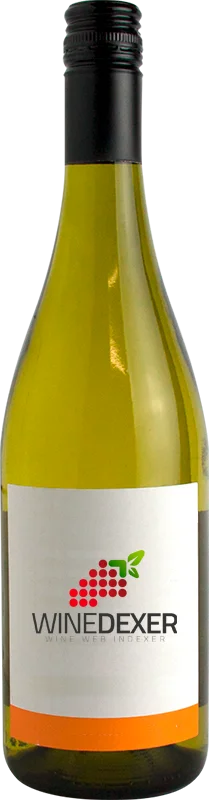
Winery DaneseDanese Bacco Chardonnay
 White wine
In the mouth this white wine is a powerful.
This wine generally goes well with lean fish, shellfish or mature and hard cheese.

Taste structure of the Danese Bacco Chardonnay from the Winery Danese
Light | Bold | |
Dry | Sweet | |
Soft | Acidic |
In the mouth the Danese Bacco Chardonnay of Winery Danese in the region of Veneto is a powerful.
Food and wine pairings with Danese Bacco Chardonnay
Pairings that work perfectly with Danese Bacco Chardonnay



Original food and wine pairings with Danese Bacco Chardonnay


The Danese Bacco Chardonnay of Winery Danese matches generally quite well with dishes of pasta, shellfish or mature and hard cheese such as recipes of pipe rigate bolognese sauce, scallop mousse or beaufort pie.
Details and technical informations about Winery Danese's Danese Bacco Chardonnay.
Discover the grape variety: Chardonnay
Whites with many faces: mineral and taut at Chablis (lemon, green apple, flint), opulent and buttery at Meursault and Puligny-Montrachet (hazelnut, brioche, yellow fruits), tense and chalky in Champagne (Blanc de Blancs). Also vinified sparkling and widely exported (Sonoma, Margaret River, Casablanca). A Burgundian variety, a cross of Pinot Noir × Gouais Blanc, half-sibling of Aligoté.
Informations about the Winery Danese
The Winery Danese is one of of the world's great estates. It offers 48 wines for sale in the of Veneto to come and discover on site or to buy online.

The wine region of Veneto
World star of Prosecco: fresh, light Glera sparklers with notes of pear, green apple and white flowers, fruity, convivial bubbles. Veronese reds from Corvina and Rondinella: light, crisp Bardolino, fruity Valpolicella, opulent, concentrated Amarone DOCG (black cherry, chocolate, raisin) from dried grapes. Mineral, almondy Soave (Garganega) whites, fresh Pinot Grigio. 97,500 ha, Italy's largest production.
The word of the wine: Basic wine
Dry, still wine intended for the production of sparkling wines (champagne, crémants, etc.). The basic wines undergo a second fermentation in the bottle for the production of carbon dioxide, and therefore of bubbles.