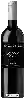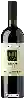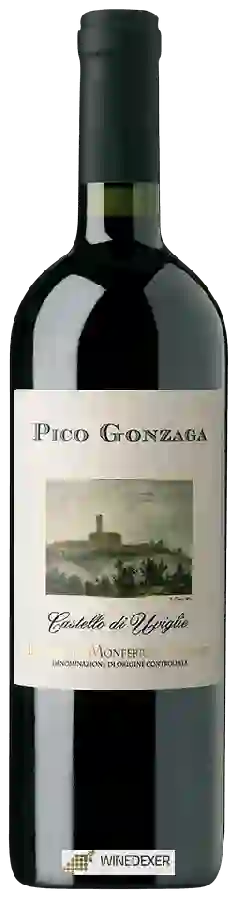
Winery Castello di UvigliePico Gonzaga
 Red wine


In the mouth this red wine is a powerful with a nice freshness.
This wine generally goes well with pork, poultry or veal.
The Pico Gonzaga of the Winery Castello di Uviglie is in the top 40 of wines of Barbera del Monferrato Superiore.
Taste structure of the Pico Gonzaga from the Winery Castello di Uviglie
Light | Bold | |
Smooth | Tannic | |
Dry | Sweet | |
Soft | Acidic |
In the mouth the Pico Gonzaga of Winery Castello di Uviglie in the region of Piedmont is a powerful with a nice freshness.
Wine flavors and olphactive analysis



On the nose the Pico Gonzaga of Winery Castello di Uviglie in the region of Piedmont often reveals types of flavors of non oak, earth or oak and sometimes also flavors of spices, red fruit or black fruit.
Food and wine pairings with Pico Gonzaga
Pairings that work perfectly with Pico Gonzaga



Original food and wine pairings with Pico Gonzaga


The Pico Gonzaga of Winery Castello di Uviglie matches generally quite well with dishes of pasta, veal or pork such as recipes of maultaschen ( swabian ravioli ), veal liver in vinegar or kig ha farz (breton stew).
Details and technical informations about Winery Castello di Uviglie's Pico Gonzaga.
Discover the grape variety: Pinot gris
Pinot Gris is a grey grape variety mutated from Pinot Noir. It has its origins in Burgundy, where it is called pinot-beurot in reference to the colour of the grey robes worn by the monks of the region. Established in Alsace since the 17th century, pinot gris was called tokay until 2007. It is made up of bunches of small berries that vary in colour from pink to blue-grey. It is particularly well suited to the continental climate because it is resistant to the cold in winter and to spring frosts. This variety also likes dry limestone soils with plenty of sunshine in the summer. Pinot Gris is well suited to late harvesting or to the selection of noble grapes, depending on the year and the concentration of sugars in the berries. Pinot Gris wines are distinguished by their aromatic complexity of white fruits, mushrooms, honey, vanilla, cinnamon, etc., and their great finesse. In the Loire Valley, pinot gris is used in the Coteaux-d'Ancenis appellations. It gives dry or sweet wines with pear and peach aromas.
Last vintages of this wine

The best vintages of Pico Gonzaga from Winery Castello di Uviglie are 2018, 2016, 2011, 2010 and 2012.
Informations about the Winery Castello di Uviglie
The Winery Castello di Uviglie is one of of the world's greatest estates. It offers 20 wines for sale in the of Barbera del Monferrato Superiore to come and discover on site or to buy online.

The wine region of Barbera del Monferrato Superiore
The wine region of Barbera del Monferrato Superiore is located in the region of Barbera del Monferrato of Piémont of Italy. Wineries and vineyards like the Domaine Tenuta Tenaglia or the Domaine Iuli produce mainly wines red and sparkling. The most planted grape varieties in the region of Barbera del Monferrato Superiore are Nebbiolo, Pinot noir and Sangiovese, they are then used in wines in blends or as a single variety. On the nose of Barbera del Monferrato Superiore often reveals types of flavors of cherry, pepper or peach and sometimes also flavors of blueberry, vanilla or coffee.
The wine region of Piedmont
Piedmont (Piemonte) holds an unrivalled place among the world's finest wine regions. Located in northwestern Italy, it is home to more DOCG wines than any other Italian region, including such well-known and respected names as Barolo, Barbaresco and Barbera d'Asti. Though famous for its Austere, Tannic, Floral">floral reds made from Nebbiolo, Piedmont's biggest success story in the past decade has been Moscato d'Asti, a Sweet, Sparkling white wine. Piedmont Lies, as its name suggests, at the foot of the Western Alps, which encircle its northern and western sides and form its naturally formidable border with Provence, France.
The word of the wine: Mouth
The mouth is the third stage of wine tasting after the eye and nose. In the mouth, the taster identifies the aromas through the retronasal route, the flavours and the texture. It is in the mouth that the overall balance of the wine is apprehended.