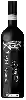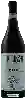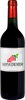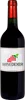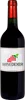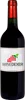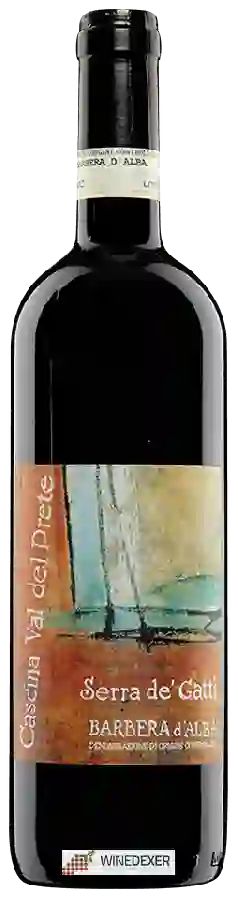
Winery Cascina Val del PreteSerra de' Gatti Barbera d'Alba
 Red wine



In the mouth this red wine is a powerful with a nice freshness.
This wine generally goes well with pork, poultry or veal.
Taste structure of the Serra de' Gatti Barbera d'Alba from the Winery Cascina Val del Prete
Light | Bold | |
Smooth | Tannic | |
Dry | Sweet | |
Soft | Acidic |
In the mouth the Serra de' Gatti Barbera d'Alba of Winery Cascina Val del Prete in the region of Piedmont is a powerful with a nice freshness.
Wine flavors and olphactive analysis





On the nose the Serra de' Gatti Barbera d'Alba of Winery Cascina Val del Prete in the region of Piedmont often reveals types of flavors of non oak, earth or microbio and sometimes also flavors of oak, spices or red fruit.
Food and wine pairings with Serra de' Gatti Barbera d'Alba
Pairings that work perfectly with Serra de' Gatti Barbera d'Alba



Original food and wine pairings with Serra de' Gatti Barbera d'Alba


The Serra de' Gatti Barbera d'Alba of Winery Cascina Val del Prete matches generally quite well with dishes of pasta, veal or pork such as recipes of tuscan pastachute, paupiettes à la mérignicaise or ham croquette with purée.
Details and technical informations about Winery Cascina Val del Prete's Serra de' Gatti Barbera d'Alba.
Discover the grape variety: Pineau d'Aunis
The wines produced in the Vendôme region are of excellent quality thanks to an exceptional grape variety: pineau d'aunis. For example, the red wines of the region, with their aromas of ripe red fruit and sweet spices, are a blend of Pineau d'Aunis, Cabernet Franc and Pinot Noir. The Vendôme hillsides are less than 200 km southwest of Paris. Pineau d'Aunis, a vigorous black grape variety, was first cultivated in the 9th century. It is characterized by a late budburst. Moreover, its foliage partially reddens in autumn. Although it is difficult to grow, Pineau d'Aunis is a high-yielding grape variety, producing between 40 and 80 hectolitres per hectare. It produces a wine with low alcohol content, supple, light-coloured and very aromatic. The "Pineau d'Aunis" grape variety is used as a single variety for the production of Coteaux du Vendômois. On the other hand, it is used in blends for Anjou, Rosé d'Anjou, Crémant de vallée de la Loire, Rosé de vallée de la Loire, Saumur, Saumur Champigny, Coteaux du Loir and Touraine. Finally, it is an accessory grape variety for Valençay.
Last vintages of this wine
The best vintages of Serra de' Gatti Barbera d'Alba from Winery Cascina Val del Prete are 2019, 2018, 2017, 2016 and 2011.
Informations about the Winery Cascina Val del Prete
The Winery Cascina Val del Prete is one of of the world's greatest estates. It offers 10 wines for sale in the of Barbera d'Alba to come and discover on site or to buy online.

The wine region of Barbera d'Alba
The wine region of Barbera d'Alba is located in the region of Piémont of Italy. Wineries and vineyards like the Domaine Bospoeper or the Domaine Roberto Voerzio produce mainly wines red and sweet. The most planted grape varieties in the region of Barbera d'Alba are Nebbiolo, they are then used in wines in blends or as a single variety. On the nose of Barbera d'Alba often reveals types of flavors of cream, stone or tree fruit and sometimes also flavors of oil, pomegranate or sage.
The wine region of Piedmont
Piedmont (Piemonte) holds an unrivalled place among the world's finest wine regions. Located in northwestern Italy, it is home to more DOCG wines than any other Italian region, including such well-known and respected names as Barolo, Barbaresco and Barbera d'Asti. Though famous for its Austere, Tannic, Floral">floral reds made from Nebbiolo, Piedmont's biggest success story in the past decade has been Moscato d'Asti, a Sweet, Sparkling white wine. Piedmont Lies, as its name suggests, at the foot of the Western Alps, which encircle its northern and western sides and form its naturally formidable border with Provence, France.
The word of the wine: Reassembly
During the vinification process, a "cap" is formed at the top of the vats with the solid parts (skin, pulp, pips, etc.), which contain tannins and colouring elements. Pumping over consists of emptying the vat from the bottom and pouring the juice back to the top, in order to mix the cap and the juice and to favour the exchange and the extraction. This old technique allows a better exchange between the solid parts and the liquid.