The Winery Weinbau Uwe Schiefer of Südburgenland of Weinland
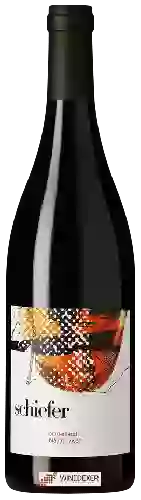
The Winery Weinbau Uwe Schiefer is one of the largest wineries in the world. It offers 39 wines for sale in of Südburgenland to come and discover on site or to buy online.

Looking for the best Winery Weinbau Uwe Schiefer wines in Südburgenland among all the wines in the region? Check out our tops of the best red, white or effervescent Winery Weinbau Uwe Schiefer wines. Also find some food and wine pairings that may be suitable with the wines from this area. Learn more about the region and the Winery Weinbau Uwe Schiefer wines with technical and enological descriptions.
How Winery Weinbau Uwe Schiefer wines pair with each other generally quite well with dishes of beef, pasta or poultry such as recipes of venison leg in casserole, wok of chinese noodles with vegetables or sophie's tuna cake.
On the nose the red wine of Winery Weinbau Uwe Schiefer. often reveals types of flavors of cherry, oaky or earthy and sometimes also flavors of blackberry, blueberry or red fruit. In the mouth the red wine of Winery Weinbau Uwe Schiefer. is a powerful with a nice balance between acidity and tannins.
The wine region of Südburgenland is located in the region of Burgenland of Weinland of Austria. Wineries and vineyards like the Domaine Weinbau Uwe Schiefer or the Domaine Weinbau Uwe Schiefer produce mainly wines red, white and pink. The most planted grape varieties in the region of Südburgenland are Zweigelt, Merlot and Cabernet-Sauvignon, they are then used in wines in blends or as a single variety. On the nose of Südburgenland often reveals types of flavors of earth, oak or tree fruit and sometimes also flavors of citrus fruit, vegetal or microbio.
In the mouth of Südburgenland is a powerful with a nice balance between acidity and tannins. We currently count 28 estates and châteaux in the of Südburgenland, producing 130 different wines in conventional, organic and biodynamic agriculture. The wines of Südburgenland go well with generally quite well with dishes of beef, pasta or poultry.
How Winery Weinbau Uwe Schiefer wines pair with each other generally quite well with dishes of rich fish (salmon, tuna etc), shellfish or mild and soft cheese such as recipes of risotto with fresh salmon and zucchini, periwinkles - the perfect cook! or typical quebec poutine.
On the nose the white wine of Winery Weinbau Uwe Schiefer. often reveals types of flavors of earth, tree fruit or citrus fruit and sometimes also flavors of tropical fruit, non oak or oak. In the mouth the white wine of Winery Weinbau Uwe Schiefer. is a with a nice freshness.
How Winery Weinbau Uwe Schiefer wines pair with each other generally quite well with dishes such as recipes .
On the nose the sparkling wine of Winery Weinbau Uwe Schiefer. often reveals types of flavors of red fruit.
The mouth is the third stage of wine tasting after the eye and nose. In the mouth, the taster identifies the aromas through the retronasal route, the flavours and the texture. It is in the mouth that the overall balance of the wine is apprehended.
How Winery Weinbau Uwe Schiefer wines pair with each other generally quite well with dishes of pork, rich fish (salmon, tuna etc) or mature and hard cheese such as recipes of flemish carbonnade, tuna, pepper and tomato quiche or 4 cheese fondue.
Planning a wine route in the of Südburgenland? Here are the wineries to visit and the winemakers to meet during your trip in search of wines similar to Winery Weinbau Uwe Schiefer.
It is the result of a seedling planted in the United States, around 1840, recovered near the Concord River, a small river located east of Massachusetts. According to genetic analysis, it is an interspecific cross between the catawba and a vitis labrusca. Concord was for a long time the main variety cultivated in North America. It was introduced into Europe at the beginning of the 19th century, in France at the beginning of the phylloxera crisis, but was not widely propagated. It could be found in the Valleraugue region (Gard) at the foot of Mont Aigoual, in the Ardèche (our photos), etc. Today, it exists only as an isolated strain that can sometimes be found on the edge of a slope, which was our case. Through various and numerous crosses, it has been used to obtain some rootstocks and direct producer hybrids, which have now almost all disappeared.