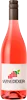
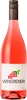
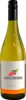
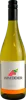
The Winery Stoneboat of Okanagan Valley of British Columbia
The Winery Stoneboat is one of the best wineries to follow in Okanagan Valley.. It offers 26 wines for sale in of Okanagan Valley to come and discover on site or to buy online.
Looking for the best Winery Stoneboat wines in Okanagan Valley among all the wines in the region? Check out our tops of the best red, white or effervescent Winery Stoneboat wines. Also find some food and wine pairings that may be suitable with the wines from this area. Learn more about the region and the Winery Stoneboat wines with technical and enological descriptions.
How Winery Stoneboat wines pair with each other generally quite well with dishes of rich fish (salmon, tuna etc), shellfish or pork such as recipes of mexican salad with spicy dressing, calamari with chorizo or ham and cheese omelette.
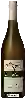
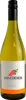
On the nose the white wine of Winery Stoneboat. often reveals types of flavors of tree fruit, tropical fruit or earth and sometimes also flavors of microbio, oak or citrus fruit. In the mouth the white wine of Winery Stoneboat. is a powerful.
The Okanagan Valley is one of six Designated Viticultural Areas in the Canadian province of British Columbia. The DryClimate in this "pocket desert" produces some unique wines made from Merlot, Cabernet Sauvignon, Riesling, Pinot Noir, Pinot Blanc, Pinot Gris and Chardonnay.
There is now an almost even split between white and red grapes planted, with Merlot the most common variety. Ice wine can be produced in the Okanagan Valley but the necessary temperatures are not as consistent as on the east coast, where the winters are much colder.
The DVA produces more than 80 percent of the province's output and is the second most prolific wine region in Canada, behind Ontario's Niagara Peninsula. There are around 185 licensed grape wineries and 3,575 hectares (8,830 acres) of vineyards.
The Long, narrow Okanagan Valley runs for around 210 kilometers (130 miles) from the Northern town of Salmon Arm to the border of the United States in the South. Much of the viticulture occurs in the Center of the region on the shores of Lake Okanagan, from which the area takes its name.
The Okanagan river then flows south into the US state of Washington, where it converges with the viticulturally significant Columbia River (home to the extensive Columbia Valley AVA). The river is spelled Okonogan in the United States.
Unlike in the fragmented Niagara Peninsula appellation, the Okanagan Valley forms just one designated viticultural area. However, the diversity of Terroir here means there are a number of subregions within it.
How Winery Stoneboat wines pair with each other generally quite well with dishes of rich fish (salmon, tuna etc) or shellfish such as recipes of spaghetti with salmon or cuttlefish rust from my grandmother in sète.
On the nose the sparkling wine of Winery Stoneboat. often reveals types of flavors of non oak, earth or tree fruit and sometimes also flavors of citrus fruit, microbio or tropical fruit.
Pinot Gris is a grey grape variety mutated from Pinot Noir. It has its origins in Burgundy, where it is called pinot-beurot in reference to the colour of the grey robes worn by the monks of the region. Established in Alsace since the 17th century, pinot gris was called tokay until 2007. It is made up of bunches of small berries that vary in colour from pink to blue-grey. It is particularly well suited to the continental climate because it is resistant to the cold in winter and to spring frosts. This variety also likes dry limestone soils with plenty of sunshine in the summer. Pinot Gris is well suited to late harvesting or to the selection of noble grapes, depending on the year and the concentration of sugars in the berries. Pinot Gris wines are distinguished by their aromatic complexity of white fruits, mushrooms, honey, vanilla, cinnamon, etc., and their great finesse. In the Loire Valley, pinot gris is used in the Coteaux-d'Ancenis appellations. It gives dry or sweet wines with pear and peach aromas.
How Winery Stoneboat wines pair with each other generally quite well with dishes of beef, pasta or veal such as recipes of burger roll, zucchini and goat cheese lasagna or sauté of veal with the moulinex cookeo.
On the nose the red wine of Winery Stoneboat. often reveals types of flavors of earth, oak or red fruit and sometimes also flavors of black fruit, non oak or spices. In the mouth the red wine of Winery Stoneboat. is a with a nice freshness.
Expose the wine to the air before serving, to allow it to open up more, to develop its aromas and to round out its tannins.
How Winery Stoneboat wines pair with each other generally quite well with dishes of veal, pork or game (deer, venison) such as recipes of veal paupiettes with cider, pork chops with curry and honey or duck with orange and honey.
On the nose the pink wine of Winery Stoneboat. often reveals types of flavors of vegetal, red fruit or non oak and sometimes also flavors of earth, oak or tree fruit.
An intraspecific cross between pinot noir and cinsaut called hermitage, obtained in South Africa in 1925 by Professor Abraham Izak Perold. Since then, it has been propagated in Africa, New Zealand, Australia, the United States (California), Canada, Brazil, Israel, etc. In France, it is practically unknown, although it is registered in the Official Catalogue of Vine Varieties on the A1 list. - Synonymy: none to date (for all the synonyms of the varieties, click here!).
How Winery Stoneboat wines pair with each other generally quite well with dishes of game (deer, venison), poultry or rich fish (salmon, tuna etc) such as recipes of duck breast in foil (barbecue), express chicken skewers with spices or hard-boiled eggs and gourmet muffins.
On the nose the sweet wine of Winery Stoneboat. often reveals types of flavors of earth, tree fruit or red fruit and sometimes also flavors of black fruit, tropical fruit.
Marking of corks, barrels or cases with an iron.
Planning a wine route in the of Okanagan Valley? Here are the wineries to visit and the winemakers to meet during your trip in search of wines similar to Winery Stoneboat.
Müller-Thurgau shows the character of its noble origins. This Swiss white grape variety is a cross between the royal madeleine and the riesling. The idea that the latter was crossed with the sylvaner is irrelevant. The variety can be recognized by its vigorous character and its semi-erect habit. Preferring rich soils and short prunings, the plant sees its buds open quite early. The buds are cottony and soft green in color. The slightly embossed and tormented blade, with 5 to 7 lobes, makes it possible to distinguish the adult leaves. The clusters appear compact, pyramidal or cylindrical in shape and small to medium in size. The flavour of the Müller-Turgau berries is reminiscent of Muscat. The juicy and crunchy pulp is revealed under a greyish skin. When ripe, the fruit has a mottled shell on a golden yellow background. Switzerland prefers to extract the juice from this variety. The wine made from it is rather heavy and does not keep well.