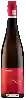
Winery Siegbert BimmerleIm Barrique Gereift Spätburgunder Trocken
 Red wine



In the mouth this red wine is a with a nice freshness.
This wine generally goes well with poultry, beef or veal.
Taste structure of the Im Barrique Gereift Spätburgunder Trocken from the Winery Siegbert Bimmerle
Light | Bold | |
Smooth | Tannic | |
Dry | Sweet | |
Soft | Acidic |
In the mouth the Im Barrique Gereift Spätburgunder Trocken of Winery Siegbert Bimmerle in the region of Baden is a with a nice freshness.
Food and wine pairings with Im Barrique Gereift Spätburgunder Trocken
Pairings that work perfectly with Im Barrique Gereift Spätburgunder Trocken



Original food and wine pairings with Im Barrique Gereift Spätburgunder Trocken

The Im Barrique Gereift Spätburgunder Trocken of Winery Siegbert Bimmerle matches generally quite well with dishes of beef, veal or game (deer, venison) such as recipes of beef tongue with mushrooms, fillet of beef with morels or alice's rabbit.
Details and technical informations about Winery Siegbert Bimmerle's Im Barrique Gereift Spätburgunder Trocken.
Discover the grape variety: Bertille Seyve 872
Interspecific crossing made by Bertille Seyve (1864-1944) between 85 Seibel and 2 Gaillard. This direct producing hybrid was mainly multiplied in the center of France where we found it and photographed it, but also in the departments of the Rhone valley, the Loiret valley, Isère, Vienne and Nièvre.
Last vintages of this wine
The best vintages of Im Barrique Gereift Spätburgunder Trocken from Winery Siegbert Bimmerle are 0, 2013
Informations about the Winery Siegbert Bimmerle
The Winery Siegbert Bimmerle is one of of the world's great estates. It offers 52 wines for sale in the of Baden to come and discover on site or to buy online.

The wine region of Baden
Baden is the southernmost of Germany's 13 official wine regions. It is also the warmest. Its relatively sunny, DryClimate permits the production of good-quality Spätburgunder (Pinot Noir) and ripe, relatively Full-bodied">Full-bodied examples of Grauburgunder (Pinot Gris) and Weissburgunder (Pinot Blanc). These are often made in oaked styles.
The word of the wine: Performance
Quantity of grapes harvested per hectare. In AOC, the average yield is limited on the proposal of the appellation syndicate, validated by the Inao. The use of high-performance plant material (especially clones) and better control of vine diseases have increased yields. This is not without consequences on the quality of the wines (dilution) and on the state of the market (too much wine). We must not over-simplify: low yields are not synonymous with quality, and it is often in years with generous harvests that we find the greatest vintages (1982 and 1986 in Bordeaux, 1996 in Champagne, 1990 and 2005 in Burgundy...).