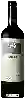
Winery Santa LiberataChainti
 Red wine


In the mouth this red wine is a with a nice freshness.
This wine generally goes well with poultry, beef or veal.
Taste structure of the Chainti from the Winery Santa Liberata
Light | Bold | |
Smooth | Tannic | |
Dry | Sweet | |
Soft | Acidic |
In the mouth the Chainti of Winery Santa Liberata in the region of Marche is a with a nice freshness.
Food and wine pairings with Chainti
Pairings that work perfectly with Chainti



Original food and wine pairings with Chainti

The Chainti of Winery Santa Liberata matches generally quite well with dishes of beef, pasta or veal such as recipes of feijoada ( portuguese cassoulet ), italian pasta salad or milanese osso buco.
Details and technical informations about Winery Santa Liberata's Chainti.
Discover the grape variety: Pinot noir
Pinot noir is an important red grape variety in Burgundy and Champagne, and its reputation is well known! Great wines such as the Domaine de la Romanée Conti elaborate their wines from this famous grape variety, and make it a great variety. When properly vinified, pinot noit produces red wines of great finesse, with a wide range of aromas depending on its advancement (fruit, undergrowth, leather). it is also the only red grape variety authorized in Alsace. Pinot Noir is not easily cultivated beyond our borders, although it has enjoyed some success in Oregon, the United States, Australia and New Zealand.
Last vintages of this wine
The best vintages of Chainti from Winery Santa Liberata are 0
Informations about the Winery Santa Liberata
The Winery Santa Liberata is one of of the world's greatest estates. It offers 4 wines for sale in the of Marche to come and discover on site or to buy online.

The wine region of Marche
Marche (or Le Marche; pronounced Mar-kay) is a region in eastern CentralItaly. It is most associated with white wines made from Trebbiano and Verdicchio grapes. Marche occupies a roughly triangular area. Its longer sides are formed by the Apennine Mountains to the west and the Adriatic Sea to the east.
The word of the wine: Residual sugars
Sugars not transformed into alcohol and naturally present in the wine. The perception of residual sugars is conditioned by the acidity of the wine. The more acidic the wine is, the less sweet it will seem, given the same amount of sugar.