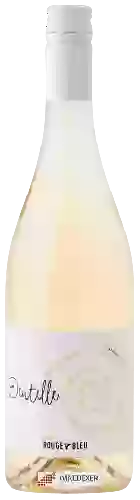
The Domaine Rouge-Bleu of Côtes-du-Rhône of Rhone Valley

The Domaine Rouge-Bleu is one of the world's great estates. It offers 7 wines for sale in of Côtes-du-Rhône to come and discover on site or to buy online.
Looking for the best Domaine Rouge-Bleu wines in Côtes-du-Rhône among all the wines in the region? Check out our tops of the best red, white or effervescent Domaine Rouge-Bleu wines. Also find some food and wine pairings that may be suitable with the wines from this area. Learn more about the region and the Domaine Rouge-Bleu wines with technical and enological descriptions.
How Domaine Rouge-Bleu wines pair with each other generally quite well with dishes of pork, game (deer, venison) or rich fish (salmon, tuna etc) such as recipes of veal saltimbocca, paella valenciana (without seafood) or grilled bass with pastis and fennel.
The wine region of Côtes-du-Rhône is located in the region of Rhône méridional of Rhone Valley of France. Wineries and vineyards like the Château de Beaucastel or the Chateau de Fonsalette produce mainly wines red, white and pink. The most planted grape varieties in the region of Côtes-du-Rhône are Mourvèdre, Viognier and Marsanne, they are then used in wines in blends or as a single variety. On the nose of Côtes-du-Rhône often reveals types of flavors of pineapple, red plum or sour cherry and sometimes also flavors of truffle, juniper or clove.
In the mouth of Côtes-du-Rhône is a powerful with a nice balance between acidity and tannins. We currently count 1765 estates and châteaux in the of Côtes-du-Rhône, producing 4241 different wines in conventional, organic and biodynamic agriculture. The wines of Côtes-du-Rhône go well with generally quite well with dishes of pork, rich fish (salmon, tuna etc) or mature and hard cheese.
How Domaine Rouge-Bleu wines pair with each other generally quite well with dishes of pork, rich fish (salmon, tuna etc) or shellfish such as recipes of braised (green) cabbage, endives with smoked salmon au gratin or paella de marisco (seafood paella).
It most certainly originates from the Anjou region and is registered in the official catalogue of wine grape varieties on the A1 list. It can also be found in South Africa, Australia, Argentina, Chile, the United States (California), New Zealand, etc. It is said to be a descendant of Savagnin and to have sauvignonasse as its second parent (Jean-Michel Boursiquot 2019). On the other hand, Chenin blanc is the half-brother of verdelho and sauvignon blanc and is the father of colombard.
How Domaine Rouge-Bleu wines pair with each other generally quite well with dishes of beef, spicy food or mature and hard cheese such as recipes of spaghetti squash bolognese style, chicken fajitas or fondue franc comtoise digeste 100 % comté.
On the nose the red wine of Domaine Rouge-Bleu. often reveals types of flavors of cherry, earthy or leather and sometimes also flavors of earth, oak or red fruit. In the mouth the red wine of Domaine Rouge-Bleu. is a powerful with a nice balance between acidity and tannins.
Synonymous with racking.
Planning a wine route in the of Côtes-du-Rhône? Here are the wineries to visit and the winemakers to meet during your trip in search of wines similar to Domaine Rouge-Bleu.
Marsanne is a white grape variety that originated in Montélimar in the Drôme, several centuries ago. Marsanne is also found in Cassis, Savoie, Languedoc-Roussillon and Saint-Péray in the Ardèche, where it produces remarkable sparkling wines. The warm, sunny climate of the Rhone Valley, Languedoc-Roussillon and Provence, as well as the dry, stony soil, are ideal conditions for its development. Its bunches are quite large and provide small, juicy berries that are sensitive to grey rot and strong winds. These two grape varieties complement each other perfectly: together they give light wines with little acidity, aromas of yellow fruit, white fruit and flowers with notes of honey and liquorice. This is for example what the appellations Saint-Péray, Hermitage, Crozes-Hermitage, Saint-Joseph, Côtes-du-Vallée du Rhône, Corbières, or Cassis express... which represent about 700 hectares.