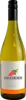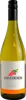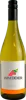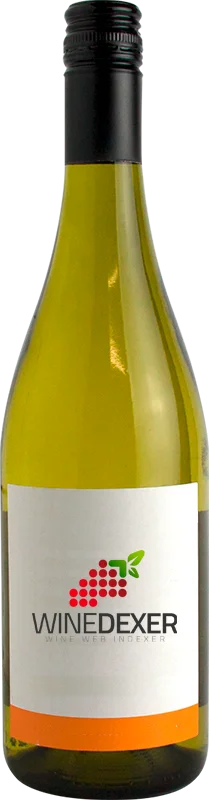
Winery Minkov BrothersTri Cycle White Blend
 White wine


This wine generally goes well with pork, vegetarian or poultry.

Food and wine pairings with Tri Cycle White Blend
Pairings that work perfectly with Tri Cycle White Blend



Original food and wine pairings with Tri Cycle White Blend



The Tri Cycle White Blend of Winery Minkov Brothers matches generally quite well with dishes of pork, game (deer, venison) or rich fish (salmon, tuna etc) such as recipes of tartiflette, casserons in the country style or tagliatelle courgette salmon from cécile and lisa.
Details and technical informations about Winery Minkov Brothers's Tri Cycle White Blend.
Discover the grape variety: Viognier
Opulent, heady whites, rich and silky, with intense aromas of apricot, yellow peach, mango, violet, honeysuckle and musky, honeyed notes. Discreet acidity, creamy finish. Star of Condrieu AOC and Château-Grillet AOC, co-vinified in Côte-Rôtie with Syrah (up to 20%). Widely exported to California (Central Coast), Australia (Eden Valley) and Languedoc. A Rhône variety.
Last vintages of this wine

The best vintages of Tri Cycle White Blend from Winery Minkov Brothers are 2015, 2016, 2014, 0 and 2013.
Informations about the Winery Minkov Brothers
The Winery Minkov Brothers is one of of the world's great estates. It offers 54 wines for sale in the of Black Sea to come and discover on site or to buy online.

The wine region of Black Sea
Vast transnational zone around the Black Sea (Bulgaria, Romania, Russia, Ukraine, Georgia, Turkey), one of the world's cradles of wine (6,000 years). Signature Saperavi in dense, deep red with signature notes of black cherry, blackberry, plum, ink, leather and a spicy touch, firm tannins. Structured Bulgarian Mavrud, supple Ukrainian Odesa Black. Rkatsiteli in taut white (green apple, citrus, mineral).
The word of the wine: Yeast
Micro-organisms at the base of all fermentative processes. A wide variety of yeasts live and thrive naturally in the vineyard, provided that treatments do not destroy them. Unfortunately, their replacement by laboratory-selected yeasts is often the order of the day and contributes to the standardization of the wine. Yeasts are indeed involved in the development of certain aromas.