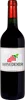
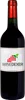
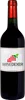
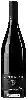
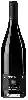
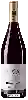
Winery Max SchellPulsahr Spätburgunder
 Red wine



In the mouth this red wine is a with a nice freshness.
This wine generally goes well with poultry, beef or veal.
Taste structure of the Pulsahr Spätburgunder from the Winery Max Schell
Light | Bold | |
Smooth | Tannic | |
Dry | Sweet | |
Soft | Acidic |
In the mouth the Pulsahr Spätburgunder of Winery Max Schell in the region of Ahr is a with a nice freshness.
Food and wine pairings with Pulsahr Spätburgunder
Pairings that work perfectly with Pulsahr Spätburgunder



Original food and wine pairings with Pulsahr Spätburgunder

The Pulsahr Spätburgunder of Winery Max Schell matches generally quite well with dishes of beef, veal or game (deer, venison) such as recipes of thai beef curry, potjevleesch (meat in a pot) or duck legs with honey and orange.
Details and technical informations about Winery Max Schell's Pulsahr Spätburgunder.
Discover the grape variety: Sérénèze de Voreppe
A very old grape variety that was once grown in the Grésivaudan region, and more generally in the Isère Valley from Grenoble to Tullins. It could also be found in Savoie and in the northern part of the Drôme. It should be noted that it was confused for a long time - even today - with the ciréné de Romans with which it shares many synonyms including sérenèze. According to Thierry Lacombe (I.N.R.A./Montpellier), it is the result of a natural intraspecific cross between the white gouais and the chatus. Sérénèze de Voreppe is registered in the Official Catalogue of wine grape varieties, list A1, under the name Sérénèze.
Last vintages of this wine
The best vintages of Pulsahr Spätburgunder from Winery Max Schell are 0, 2016
Informations about the Winery Max Schell
The Winery Max Schell is one of of the world's great estates. It offers 37 wines for sale in the of Ahr to come and discover on site or to buy online.

The wine region of Ahr
Ahr is one of Germany’s least-known and Northernmost wine regions, known for its Pinot Noir reds. It Lies immediately north of the Mosel, and follows the Ahr River in the Final stages of its journey towards its confluence with the Rhein. One might expect a wine region this far north (50°N) to specialize in white wines – like almost every other cool-Climate wine region. After all, neighboring Mosel and Mittelrhein both clearly favor white wines (around 85 percent).
The word of the wine: Shipping (liquor)
In champagne and wines made according to the traditional method, wine is added before corking to fill the void in the bottle created by disgorging. This added wine is often sweetened by sugar incorporated in variable proportions according to the style of wine sought (see dosage). Syn.: liqueur de dosage.