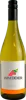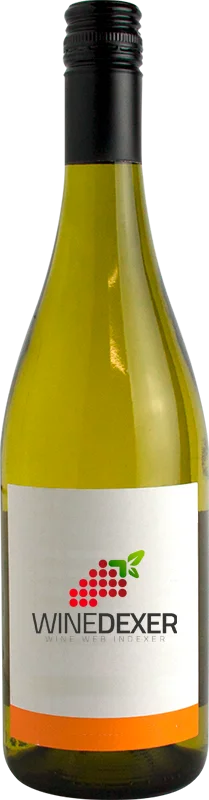
Winery Mastro BinelliPinot Grigio
 White wine



In the mouth this white wine is a .
This wine generally goes well with vegetarian, shellfish or mushrooms.
Taste structure of the Pinot Grigio from the Winery Mastro Binelli
Light | Bold | |
Dry | Sweet | |
Soft | Acidic |
In the mouth the Pinot Grigio of Winery Mastro Binelli in the region of Emilia-Romagna is a .
Food and wine pairings with Pinot Grigio
Pairings that work perfectly with Pinot Grigio


Original food and wine pairings with Pinot Grigio

The Pinot Grigio of Winery Mastro Binelli matches generally quite well with dishes of shellfish, vegetarian or mushrooms such as recipes of sublime fish and shrimp colombo, goat cheese and bacon quiche or flying with the wind of the seas.
Details and technical informations about Winery Mastro Binelli's Pinot Grigio.
Discover the grape variety: Prosecco
It is said to be of Slovenian origin, where it is cultivated under the name of Prosekar, also known for a long time in Italy under the name of Glera. It should not be confused with prosecco lungo - although there is a family link - and prosecco nostrano, which is none other than Tuscany's malvasia. Note that Vitouska - another Italian grape variety - is the result of a natural intraspecific cross between Tuscan malvasia and Prosecco. Under the name of Glera, it is registered in the Official Catalogue of wine grape varieties list A. It can be found in practically all of the former Yugoslavia, and more surprisingly in Argentina, but is virtually unknown in France.
Last vintages of this wine
The best vintages of Pinot Grigio from Winery Mastro Binelli are 2015, 0, 2018, 2017
Informations about the Winery Mastro Binelli
The Winery Mastro Binelli is one of of the world's great estates. It offers 46 wines for sale in the of Emilia-Romagna to come and discover on site or to buy online.

The wine region of Emilia-Romagna
Romagna/emilia">Emilia-Romagna is a Rich and fertile region in Northern Italy, and one of the country's most prolific wine-producing regions, with over 58,000 hectares (143,320 acres) of vines in 2010. It is 240 kilometers (150 miles) wide and stretches across almost the entire northern Italian peninsula, sandwiched between Tuscany to the South, Lombardy and Veneto to the north and the Adriatic Sea to the east. Nine miles of Liguria is all that separates Emilia-Romagna from the Ligurian Sea, and its uniqueness as the only Italian region with both an east and west coast. Emilia-Romagna's wine-growing heritage dates back to the seventh century BC, making it one of the oldest wine-growing regions in Italy.
The word of the wine: New
Said of a wine from the last harvest, and more particularly of an early wine.