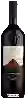
Winery Le VolpiIl Bianco delle Volpi
 White wine



In the mouth this white wine is a powerful with a nice freshness.
This wine generally goes well with lean fish, shellfish or mature and hard cheese.
Taste structure of the Il Bianco delle Volpi from the Winery Le Volpi
Light | Bold | |
Dry | Sweet | |
Soft | Acidic |
In the mouth the Il Bianco delle Volpi of Winery Le Volpi in the region of Veneto is a powerful with a nice freshness.
Food and wine pairings with Il Bianco delle Volpi
Pairings that work perfectly with Il Bianco delle Volpi



Original food and wine pairings with Il Bianco delle Volpi


The Il Bianco delle Volpi of Winery Le Volpi matches generally quite well with dishes of pasta, shellfish or mature and hard cheese such as recipes of tagliatelle with foie gras, panga curry or pancake cake with mountain filling.
Details and technical informations about Winery Le Volpi's Il Bianco delle Volpi.
Discover the grape variety: Millot Léon
Interspecific crossing between the 101-14 Millardet and Grasset (vitis riparia X vitis rupestris) and the goldriesling obtained by Eugène Kühlmann (1858-1932) around 1911 and marketed around 1921. With these same parents, he obtained among others the Maréchal Foch. Léon Millot is still found in Canada, the United States, Switzerland, Germany, Belgium, Denmark, Sweden, the Netherlands, Poland and England. In France, where it was grown for a long time in Alsace, it is no longer grown in the vineyards, although it is listed in the Official Catalogue of Vine Varieties, list A.
Last vintages of this wine
The best vintages of Il Bianco delle Volpi from Winery Le Volpi are 0
Informations about the Winery Le Volpi
The Winery Le Volpi is one of of the world's great estates. It offers 15 wines for sale in the of Veneto to come and discover on site or to buy online.

The wine region of Veneto
Veneto is an important and growing wine region in northeastern Italy. Veneto is administratively Part of the Triveneto area, aLong with its smaller neighbors, Trentino-Alto Adige and Friuli-Venezia Giulia. In terms of geography, culture and wine styles, it represents a transition from the Alpine and Germanic-Slavic end of Italy to the warmer, drier, more Roman lands to the South. Veneto is slightly smaller than the other major Italian wine regions - Piedmont, Tuscany, Lombardy, Puglia and Sicily - but it produces more wine than any of them.
The word of the wine: Malolactic fermentation
Called second fermentation or malo for short. It is the degradation (under the effect of bacteria) of the malic acid naturally present in the wine into milder, less aggressive lactic acid. Some producers or wineries refuse this operation by "blocking the malo" (by cold and adding SO2) to keep a maximum of acidity which carries the aromas and accentuates the sensation of freshness.