The Winery Laballe of South West
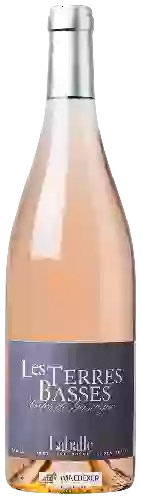
The Winery Laballe is one of the world's great estates. It offers 21 wines for sale in of South West to come and discover on site or to buy online.
Looking for the best Winery Laballe wines in South West among all the wines in the region? Check out our tops of the best red, white or effervescent Winery Laballe wines. Also find some food and wine pairings that may be suitable with the wines from this area. Learn more about the region and the Winery Laballe wines with technical and enological descriptions.
How Winery Laballe wines pair with each other generally quite well with dishes of beef, lamb or pork such as recipes of hungarian goulash, osso bucco of lamb or braised (green) cabbage.
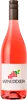
On the nose the pink wine of Winery Laballe. often reveals types of flavors of strawberries, red fruit or citrus and sometimes also flavors of minerality, earth or citrus fruit.
The South-West is a large territorial area of France, comprising the administrative regions of Aquitaine, Limousin and Midi-Pyrénées. However, as far as the French wine area is concerned, the South-West region is a little less clear-cut, as it excludes Bordeaux - a wine region so productive that it is de facto an area in its own right. The wines of the South West have a Long and eventful history. The local rivers play a key role, as they were the main trade routes to bring wines from traditional regions such as Cahors, Bergerac, Buzet and Gaillac to their markets.
The last Trading post before the wines left for the lucrative markets of Britain was the wine town and port of Bordeaux. Britain has been a historic trading partner for the region, which was nominally British for a period following the marriage of Eleanor of Aquitaine to Henry II of Britain. However, Bordeaux businessmen saw the wines in transit as competition for their own local products and took strong measures to ensure their financial security. The result is the French wine map we know today, with Bordeaux being promoted and the other wine regions of the South West struggling to gain recognition for the diversity and Character of their wines.
This history also explains why the Bordeaux Grapes Cabernet Sauvignon, Merlot and Sauvignon Blanc are now three of the best-known grape varieties in the world, while traditional South West grapes such as Fer Servadou, Len de l'El and Tannat are relatively unknown.
How Winery Laballe wines pair with each other generally quite well with dishes of shellfish, vegetarian or poultry such as recipes of mouclade, magic cake cheese quiche or violet omelette.
On the nose the white wine of Winery Laballe. often reveals types of flavors of grapefruit, citrus or peach and sometimes also flavors of tree fruit, citrus fruit or earth. In the mouth the white wine of Winery Laballe. is a with a good balance between acidity and sweetness.
Originally from Bordeaux, Sauvignon, or Sauvignon Blanc, is reputed to be one of the best French grape varieties for white wine. It is a white grape variety, not to be confused with Sauvignon Gris and its pale yellow color, or with Cabernet Sauvignon which produces red wines. Particularly famous thanks to Sancerre, Sauvignon Blanc is cultivated as far as New Zealand, where it produces great wines whose reputation is well established.
How Winery Laballe wines pair with each other generally quite well with dishes of beef, lamb or poultry such as recipes of veal shank with mushrooms, baekenofe (alsatian meat stew) or spicy crispy chicken.
On the nose the red wine of Winery Laballe. often reveals types of flavors of earth, grapefruit or citrus and sometimes also flavors of lemon, pear or tree fruit.
Chemical compounds derived from sulphur (better known in the wine world as SO2) and used by winemakers for their antiseptic, antioxidant and antioxidant properties.
Planning a wine route in the of South West? Here are the wineries to visit and the winemakers to meet during your trip in search of wines similar to Winery Laballe.
Tannat is a red grape variety from Béarn which belongs to the cotoïdes family. Present in several vineyards of France, it occupies nearly 3,000 ha. Its leaves are reddish with tan patches. Its bunches are either of normal size or larger. Its berries have a thin skin and are rounded. Its foliage has a swarthy appearance. This variety must be pruned long because it is vigorous. It likes sandy and gravelly soils. Tannat is often exposed to leafhoppers and mites. It is also somewhat susceptible to grey rot. It has 11 approved clones, including 474, 717 and 794. Once mature, this variety produces acidic, fruity, tannic, acidic and full-bodied wines. Various aromas emerge, notably tobacco, cinnamon and exotic wood. Tannat is rarely used alone. It is combined with iron-servadou to obtain a fruitier taste or with cabernet sauvignon to be more rounded.