The Winery Kollwentz of Burgenland of Weinland
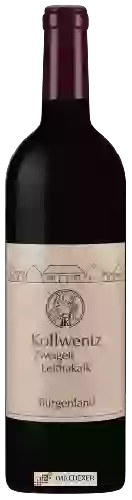
The Winery Kollwentz is one of the world's great estates. It offers 41 wines for sale in of Burgenland to come and discover on site or to buy online.
Looking for the best Winery Kollwentz wines in Burgenland among all the wines in the region? Check out our tops of the best red, white or effervescent Winery Kollwentz wines. Also find some food and wine pairings that may be suitable with the wines from this area. Learn more about the region and the Winery Kollwentz wines with technical and enological descriptions.
How Winery Kollwentz wines pair with each other generally quite well with dishes of beef, lamb or game (deer, venison) such as recipes of puchero, steamed lamb shoulder with cumin and coriander or duck breast with orange sauce.
On the nose the red wine of Winery Kollwentz. often reveals types of flavors of cherry, oaky or blackberry and sometimes also flavors of blueberry, vanilla or black cherries. In the mouth the red wine of Winery Kollwentz. is a powerful with a nice balance between acidity and tannins.
Burgenland is a large wine-producing region on the eastern border of Austria. Despite the country's image as the producer of some of the world's finest white wines, Austria is also home to a thriving red wine culture: Burgenland, with its sunny, continental summers, is the country's key red wine region, with its wines based mainly on the Blaufränkisch and Zweigelt grape varieties. Sweet, botrytized wines are also a specialty of the region, particularly in the Terroir surrounding the Neusiedlersee lake.
The region occupies a narrow strip of land that runs from the Danube River down to Steiermark in the South.
On its eastern side is the border with Hungary, and to the west Lies the most eastern foothills of the Alps. Steiermark aside, Burgenland is one of Austria's southernmost wine regions, and topographically is more aligned with Hungary than with much of the rest of Austria.
Burgenland is home to four DAC appellations: from North to south; Neusiedlersee, Leithaberg, Mittelburgenland and Eisenberg. Within each of these zones, any wines which do not conform to the particular classification are labeled with the Burgenland appellation
Burgenland's Lake Neusiedl (Neusiedlersee) is one of the viticultural focus points of the region.
It stores summer heat from the Pannonian Plain, an expansive, Warm area which covers much of Hungary and eastern Austria, effectively lengthening the ripening season into autumn. Humidity from the lake promotes the spread of noble rot (Botrytis cinerea) in the regions of Seewinkel and Rust.
The Ausbruch, Beerenauslese and Trockenbeerenauslese wines that are made near the lake are among the finest and most sought-after in the world. However the Neusiedlersee DAC applies to red wines based on the Zweigelt grape variety.
How Winery Kollwentz wines pair with each other generally quite well with dishes of pork, rich fish (salmon, tuna etc) or vegetarian such as recipes of blue cord, sardines with escabeche or quiche with leeks and fresh salmon from flo.
On the nose the white wine of Winery Kollwentz. often reveals types of flavors of cream, oaky or citrus and sometimes also flavors of apples, butter or minerality. In the mouth the white wine of Winery Kollwentz. is a powerful with a nice freshness.
The white Chardonnay is a grape variety that originated in France (Burgundy). It produces a variety of grape specially used for wine making. It is rare to find this grape to eat on our tables. This variety of grape is characterized by small bunches, and small grapes. White Chardonnay can be found in many vineyards: South West, Burgundy, Jura, Languedoc & Roussillon, Cognac, Bordeaux, Beaujolais, Savoie & Bugey, Loire Valley, Champagne, Rhone Valley, Armagnac, Lorraine, Alsace, Provence & Corsica.
How Winery Kollwentz wines pair with each other generally quite well with dishes of lamb, pork or mature and hard cheese such as recipes of express couscous in a pressure cooker, endives au gratin without béchamel sauce or escalopes savoyardes.
Action which consists in removing the bad grains, not ripe or affected by the rot. We often use vibrating sorting tables which, by shaking, make the impurities fall to the ground. In the case of sweet wines, we speak of harvesting by successive selections, in several passages, to select the very ripe grapes each time.
Planning a wine route in the of Burgenland? Here are the wineries to visit and the winemakers to meet during your trip in search of wines similar to Winery Kollwentz.