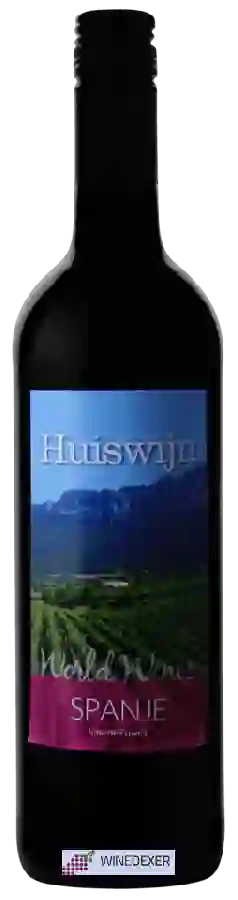
Winery HuiswijnSpanje
 Red wine
In the mouth this red wine is a powerful.
This wine generally goes well with poultry, beef or veal.

Taste structure of the Spanje from the Winery Huiswijn
Light | Bold | |
Smooth | Tannic | |
Dry | Sweet | |
Soft | Acidic |
In the mouth the Spanje of Winery Huiswijn in the region of Vinos de Pago is a powerful.
Food and wine pairings with Spanje
Pairings that work perfectly with Spanje



Original food and wine pairings with Spanje


The Spanje of Winery Huiswijn matches generally quite well with dishes of beef, veal or poultry such as recipes of burger roll, roast veal orloff or chicken curry samoussas.
Details and technical informations about Winery Huiswijn's Spanje.
Discover the grape variety: Groppello
Supple and fruity reds with a clear ruby robe, smooth tannins and a charming palate, with signature aromas of cherry, raspberry, violet, soft spices and typical bitter notes. Also the star of the Chiaretto del Garda rosés — lively and delicate. The aromatic signature of the Lombard shore of Lake Garda, mainly in Valtènesi. Native Italian black grape from Lombardy, grown on the shores of Lake Garda.
Informations about the Winery Huiswijn
The Winery Huiswijn is one of of the world's greatest estates. It offers 10 wines for sale in the of Vinos de Pago to come and discover on site or to buy online.

The wine region of Vinos de Pago
Top of the Spanish quality pyramid (above DOCa and DO), reserved for 25 exceptional estates. Estate wines, grapes and vinification exclusively on site, 10 years of track record. All styles: concentrated, barrel-aged Cabernet, Syrah and Tempranillo reds (Dominio de Valdepusa, Arínzano, Pago de Otazu), maker's blends, a few ambitious whites. Great stylistic freedom.
The word of the wine: Tannic
Said of an astringent wine rich in tannins.