The Domaine de la Clapière of Pays d'Oc
The Domaine de la Clapière is one of the world's great estates. It offers 16 wines for sale in of Pays d'Oc to come and discover on site or to buy online.
Looking for the best Domaine de la Clapière wines in Pays d'Oc among all the wines in the region? Check out our tops of the best red, white or effervescent Domaine de la Clapière wines. Also find some food and wine pairings that may be suitable with the wines from this area. Learn more about the region and the Domaine de la Clapière wines with technical and enological descriptions.
How Domaine de la Clapière wines pair with each other generally quite well with dishes of pasta, vegetarian or appetizers and snacks such as recipes of mascarpone/gorgonzola macaroni gratin, quiche with leeks and fresh salmon from flo or tapenade with green olives.
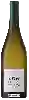
On the nose the pink wine of Domaine de la Clapière. often reveals types of flavors of red fruit, tropical fruit. In the mouth the pink wine of Domaine de la Clapière. is a with a nice freshness.
Pays d'Oc is the PGI for red, white and rosé wines that are produced over a wide area of the southern coast of France. The PGI catchment area corresponds roughly to the Languedoc-roussillon">Languedoc-Roussillon wine region, one of the largest wine regions in France. The area covers all wines that are not produced under the strict laws that govern AOC-level appellations in the regions: among them, Corbières, Minervois and the Languedoc appellation itself. The Pays d'Oc PGI is arguably the most important in France, producing the majority of the country's PGI wines.
Five separate departments fall under the PGI (Hérault, Aude, Gard, Pyrénées-Orientales and six communes in southern Lozère), which is delimited by administrative rather than geographical boundaries. The name therefore covers a wide variety of terrain, from the mountain ranges of the southern Massif Central to the coastal plains of the Camargue crossed by rivers. Vineyards jostle for position in the Garrigue landscape. The Pays d'Oc has a MediterraneanClimate with hot, Dry summers and mild winters.
How Domaine de la Clapière wines pair with each other generally quite well with dishes of pasta, vegetarian or poultry such as recipes of pasta with parmesan cream and ham, goat cheese and bacon quiche or home-made white pudding.
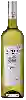
On the nose the white wine of Domaine de la Clapière. often reveals types of flavors of tree fruit. In the mouth the white wine of Domaine de la Clapière. is a .
Cinsaut noir is a grape variety that originated in France (Provence). It produces a variety of grape specially used for wine making. It is rare to find this grape to eat on our tables. This variety of grape is characterized by large bunches and large grapes. Cinsaut noir can be found in several vineyards: South-West, Cognac, Bordeaux, Provence & Corsica, Rhône valley, Languedoc & Roussillon, Loire valley, Savoie & Bugey, Beaujolais, Armagnac.
How Domaine de la Clapière wines pair with each other generally quite well with dishes of beef, pasta or veal such as recipes of beef tongue with pickle sauce, fideuà (paella with pasta and fish) or venison bourguignon.
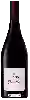
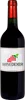
On the nose the red wine of Domaine de la Clapière. often reveals types of flavors of cherry, oaky or smoke and sometimes also flavors of blackberry, blueberry or tobacco. In the mouth the red wine of Domaine de la Clapière. is a powerful with a nice balance between acidity and tannins.
Specialist in wine-making techniques. It is a profession and not a passion: one can be an oenophile without being an oenologist (and the opposite too!). Formerly attached to the Faculty of Pharmacy, oenology studies have become independent and have their own university course. Learning to make wine requires a good chemical background but also, increasingly, a good knowledge of the plant. Some oenologists work in laboratories (analysis). Others, the consulting oenologists, work directly in the properties.
Planning a wine route in the of Pays d'Oc? Here are the wineries to visit and the winemakers to meet during your trip in search of wines similar to Domaine de la Clapière.
Mainly cultivated in the Languedoc region, carignan originates from Spain. Because of its very resistant branches, it is often called hardwood. Its bunches are quite large. They are compact and winged with a lignified stalk. The berries are spherical in shape and take on a bluish-black colour. Carignan has a total of 25 approved clones, the best known of which are 274, 65 and 9. The carignan buds at the beginning of June and is protected from spring frosts. It does not reach maturity until the third period. Also, this grape variety needs warmth and sunshine. It appreciates dry and not very fertile soils. Carignan vines can live for more than 100 years. Those that are more than 30 years old produce a better wine. This wine is well coloured. It is generous and powerful at the same time. Pepper, cherry, blackberry, banana, raspberry, almond, prune and violet are some of the aromas that this grape variety gives off.