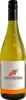
Winery FontezoppaDi Rosa e di Viola Marche Rosso
 Red wine



In the mouth this red wine is a powerful with a nice freshness.
This wine generally goes well with poultry, beef or veal.
Taste structure of the Di Rosa e di Viola Marche Rosso from the Winery Fontezoppa
Light | Bold | |
Smooth | Tannic | |
Dry | Sweet | |
Soft | Acidic |
In the mouth the Di Rosa e di Viola Marche Rosso of Winery Fontezoppa in the region of Marche is a powerful with a nice freshness.
Food and wine pairings with Di Rosa e di Viola Marche Rosso
Pairings that work perfectly with Di Rosa e di Viola Marche Rosso



Original food and wine pairings with Di Rosa e di Viola Marche Rosso

The Di Rosa e di Viola Marche Rosso of Winery Fontezoppa matches generally quite well with dishes of beef, pasta or veal such as recipes of barbecue burger, my lasagna bolognese (without béchamel sauce) or calf sweetbread with mushrooms.
Details and technical informations about Winery Fontezoppa's Di Rosa e di Viola Marche Rosso.
Discover the grape variety: Frontenac
A cross between Landot 4511 and Vitis Riparia 89 (very resistant to cold) obtained in 1978 at the University of Minnesota (United States) and propagated from 1996. It can also be found in Canada (Quebec, Ontario, etc.), in Lithuania, etc. In France, it is practically unknown. Note that the white and grey Frontenac are derived from mutations of the black, encountered and isolated in 2003 for the grey and in September 2005 for the white. - Synonymy: MN 1047 (for all the grape variety synonyms, click here!).
Last vintages of this wine
The best vintages of Di Rosa e di Viola Marche Rosso from Winery Fontezoppa are 0
Informations about the Winery Fontezoppa
The Winery Fontezoppa is one of of the world's great estates. It offers 55 wines for sale in the of Marche to come and discover on site or to buy online.

The wine region of Marche
Marche (or Le Marche; pronounced Mar-kay) is a region in eastern CentralItaly. It is most associated with white wines made from Trebbiano and Verdicchio grapes. Marche occupies a roughly triangular area. Its longer sides are formed by the Apennine Mountains to the west and the Adriatic Sea to the east.
The word of the wine: Vine
Climbing shrubs with woody stems called shoots that produce grapes in clusters.