The Clos Roussely of Loire Valley

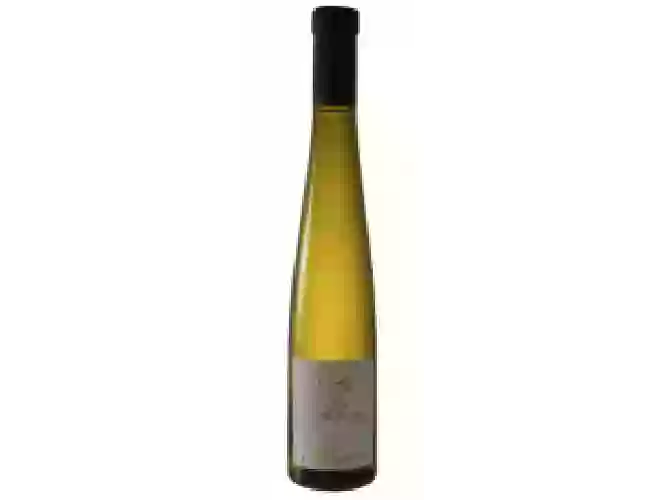
The Clos Roussely is one of the best wineries to follow in Vallée de la Loire.. It offers 24 wines for sale in of Loire Valley to come and discover on site or to buy online.
Looking for the best Clos Roussely wines in Loire Valley among all the wines in the region? Check out our tops of the best red, white or effervescent Clos Roussely wines. Also find some food and wine pairings that may be suitable with the wines from this area. Learn more about the region and the Clos Roussely wines with technical and enological descriptions.
How Clos Roussely wines pair with each other generally quite well with dishes of beef, pork or game (deer, venison) such as recipes of beef tongue in hot pickle sauce, summer orecchiette or rabbit socks in gibelotte.
The Loire Valley is a key wine region in western France. It follows the course of the Loire River on its Long journey through the heart of France, from the inland hills of the Auvergne to the plains of the French Atlantic coast near Nantes (Muscadet country). Important in terms of quantity and quality, the region produces large quantities (about 4 million h/l each year) of everyday wines, as well as some of France's greatest wines. Diversity is another of the region's major assets; the styles of wine produced here range from the light, tangy Muscadet to the Sweet, honeyed Bonnezeaux, the Sparkling whites of Vouvray and the juicy, Tannic reds of Chinon and Saumur.
It's quite telling that this brief overview of the region's wines doesn't even mention the Loire Valley's two most famous wines - Sancerre and Pouilly-Fume. White wines are clearly the strong point of the Loire Valley and represent the vast majority of production. A significant proportion of these are produced under PGI appellations, most commonly the IGP Loire (formerly Vin de Pays du Jardin de la France), which covers the whole region. The main white Grape varieties used for the production of white wines in the Loire Valley are Sauvignon Blanc, Chenin Blanc, Melon de Bourgogne and, more popular than the traditional, Chardonnay.
How Clos Roussely wines pair with each other generally quite well with dishes of beef, lamb or pork such as recipes of shepherd's pie (potatoes, beef, carrots, bacon), rolled lamb shoulder with herbs or spaghetti squash with cream and bacon.
On the nose the red wine of Clos Roussely. often reveals types of flavors of cherry, earthy or red fruit and sometimes also flavors of licorice, leather or earth.
The white Chardonnay is a grape variety that originated in France (Burgundy). It produces a variety of grape specially used for wine making. It is rare to find this grape to eat on our tables. This variety of grape is characterized by small bunches, and small grapes. White Chardonnay can be found in many vineyards: South West, Burgundy, Jura, Languedoc & Roussillon, Cognac, Bordeaux, Beaujolais, Savoie & Bugey, Loire Valley, Champagne, Rhone Valley, Armagnac, Lorraine, Alsace, Provence & Corsica.
How Clos Roussely wines pair with each other generally quite well with dishes of rich fish (salmon, tuna etc), shellfish or vegetarian such as recipes of spinach, smoked salmon and ricotta lasagne, chicken maffé (africa) or zucchini and goat cheese quiche.
On the nose the white wine of Clos Roussely. often reveals types of flavors of citrus fruit, grapefruit or apples and sometimes also flavors of peach, minerality or melon.
Normal for certain young red wines rich in tannin, bitterness is in other cases a defect due to a bacterial disease.
How Clos Roussely wines pair with each other generally quite well with dishes such as recipes .
Cabernet Franc is one of the oldest red grape varieties in Bordeaux. The Libourne region is its terroir where it develops best. The terroirs of Saint-Emilion and Fronsac allow it to mature and develop its best range of aromas. It is also the majority in many blends. The very famous Château Cheval Blanc, for example, uses 60% Cabernet Franc. The wines produced with Cabernet Franc are medium in colour with fine tannins and subtle aromas of small red fruits and spices. When blended with Merlot and Cabernet Sauvignon, it brings complexity and a bouquet of aromas to the wine. It produces fruity wines that can be drunk quite quickly, but whose great vintages can be kept for a long time. It is an earlier grape variety than Cabernet Sauvignon, which means that it is planted as far north as the Loire Valley. In Anjou, it is also used to make sweet rosé wines. Cabernet Franc is now used in some twenty countries in Europe and throughout the world.
How Clos Roussely wines pair with each other generally quite well with dishes such as recipes .
On the nose the sweet wine of Clos Roussely. often reveals types of flavors of ginger, earth or spices.
During the vinification process, a "cap" is formed at the top of the vats with the solid parts (skin, pulp, pips, etc.), which contain tannins and colouring elements. Pumping over consists of emptying the vat from the bottom and pouring the juice back to the top, in order to mix the cap and the juice and to favour the exchange and the extraction. This old technique allows a better exchange between the solid parts and the liquid.
Planning a wine route in the of Loire Valley? Here are the wineries to visit and the winemakers to meet during your trip in search of wines similar to Clos Roussely.
The wines produced in the Vendôme region are of excellent quality thanks to an exceptional grape variety: pineau d'aunis. For example, the red wines of the region, with their aromas of ripe red fruit and sweet spices, are a blend of Pineau d'Aunis, Cabernet Franc and Pinot Noir. The Vendôme hillsides are less than 200 km southwest of Paris. Pineau d'Aunis, a vigorous black grape variety, was first cultivated in the 9th century. It is characterized by a late budburst. Moreover, its foliage partially reddens in autumn. Although it is difficult to grow, Pineau d'Aunis is a high-yielding grape variety, producing between 40 and 80 hectolitres per hectare. It produces a wine with low alcohol content, supple, light-coloured and very aromatic. The "Pineau d'Aunis" grape variety is used as a single variety for the production of Coteaux du Vendômois. On the other hand, it is used in blends for Anjou, Rosé d'Anjou, Crémant de vallée de la Loire, Rosé de vallée de la Loire, Saumur, Saumur Champigny, Coteaux du Loir and Touraine. Finally, it is an accessory grape variety for Valençay.