The Clos Constantin of Terrasses du Larzac of Languedoc-Roussillon
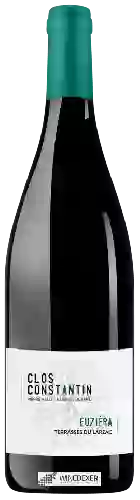
Clos Constantin
The winery offers 11 different wines
3.8


Note - 1Note - 1Note - 1Note - 0.5Note - 0
Its wines get an average rating of 3.8.
It is ranked in the top 6 of the estates of Languedoc-Roussillon.
It is located in Terrasses du Larzac in the region of Languedoc-Roussillon
Find the Clos Constantin on Facebook

The Clos Constantin is one of the largest wineries in the world. It offers 11 wines for sale in of Terrasses du Larzac to come and discover on site or to buy online.


Top Clos Constantin wines

Looking for the best Clos Constantin wines in Terrasses du Larzac among all the wines in the region? Check out our tops of the best red, white or effervescent Clos Constantin wines. Also find some food and wine pairings that may be suitable with the wines from this area. Learn more about the region and the Clos Constantin wines with technical and enological descriptions.

The top red wines of Clos Constantin

Food and wine pairings with a red wine of Clos Constantin

How Clos Constantin wines pair with each other generally quite well with dishes of beef, pasta or veal such as recipes of thai beef skewers, the corsican soup or meatballs catalan style.

Organoleptic analysis of red wines of Clos Constantin

On the nose the red wine of Clos Constantin. often reveals types of flavors of red fruit. In the mouth the red wine of Clos Constantin. is a powerful with a nice balance between acidity and tannins.

The best vintages in the red wines of Clos Constantin

  • 2017With an average score of 3.87/5
  • 2018With an average score of 3.70/5

The grape varieties most used in the red wines of Clos Constantin.

  • Shiraz/Syrah
  • Grenache
  • Cinsault
  • Cabernet Sauvignon
  • Carignan
  • Grenache Gris

Discovering the wine region of Terrasses du Larzac

The wine region of Terrasses du Larzac is located in the region of Languedoc of Languedoc-Roussillon of France. Wineries and vineyards like the Domaine Montcalmès or the Domaine La Pèira en Damaisèla produce mainly wines red, white and pink. The most planted grape varieties in the region of Terrasses du Larzac are Mourvèdre, Cinsaut and Merlot, they are then used in wines in blends or as a single variety. On the nose of Terrasses du Larzac often reveals types of flavors of cherry, graphite or licorice and sometimes also flavors of citrus fruit, blackberry jam or gingerbread.

In the mouth of Terrasses du Larzac is a powerful with a nice balance between acidity and tannins. We currently count 129 estates and châteaux in the of Terrasses du Larzac, producing 299 different wines in conventional, organic and biodynamic agriculture. The wines of Terrasses du Larzac go well with generally quite well with dishes of beef, pasta or veal.

The top white wines of Clos Constantin

Food and wine pairings with a white wine of Clos Constantin

How Clos Constantin wines pair with each other generally quite well with dishes of pasta, vegetarian or poultry such as recipes of quiche with mixed vegetables, quiche lorraine or chicken tenderloins with lemon cream.

Organoleptic analysis of white wines of Clos Constantin

On the nose the white wine of Clos Constantin. often reveals types of flavors of tree fruit. In the mouth the white wine of Clos Constantin. is a powerful.

The best vintages in the white wines of Clos Constantin

  • 2021With an average score of 3.90/5
  • 0With an average score of 3.88/5

The grape varieties most used in the white wines of Clos Constantin.

  • Grenache Blanc
  • Vermentino

Discover the grape variety: Grenache

Grenache noir is a grape variety that originated in Spain. It produces a variety of grape specially used for the elaboration of wine. It is rare to find this grape to eat on our tables. This variety of grape is characterized by medium to large bunches, and grapes of medium size. Grenache noir can be found in many vineyards: South West, Cognac, Bordeaux, Provence & Corsica, Languedoc & Roussillon, Rhone Valley, Loire Valley, Savoie & Bugey, Beaujolais.

The top pink wines of Clos Constantin

Food and wine pairings with a pink wine of Clos Constantin

How Clos Constantin wines pair with each other generally quite well with dishes of pasta, vegetarian or appetizers and snacks such as recipes of tuna lasagna, quiche with bacon and gruyère cheese or lupine seeds for kemia (the aperitif).

Organoleptic analysis of pink wines of Clos Constantin

In the mouth the pink wine of Clos Constantin. is a with a nice freshness.

The grape varieties most used in the pink wines of Clos Constantin.

  • Shiraz/Syrah
  • Cinsault

The word of the wine: MA

Auxiliary brand or buyer's brand (supermarket for example) gathering champagnes of various origins. It offers no guarantee of quality or traceability.

Discover other wineries and winemakers neighboring the Clos Constantin

Planning a wine route in the of Terrasses du Larzac? Here are the wineries to visit and the winemakers to meet during your trip in search of wines similar to Clos Constantin.

Discover the grape variety: Vermentino

The vermentino grape variety was widespread in Italy, Sardinia and Corsica. Today, Vermentino is grown in the regions bordering the Mediterranean, mainly in Provence (Côtes de Provence, Bellet), Corsica (Corse Calvi), Languedoc (Côtes du Roussillon, Costières de Nîmes) and the Rhône Valley (Côtes du Luberon). Because it ripens late, Vermentino requires a warm climate for its development and can only be grown in regions with good sun exposure. Conversely, cold or temperate climates do not allow it to ripen properly. Vermentino is only susceptible to powdery mildew. When vinified on its own, Vermentino produces a single-variety dry white wine that is light and full-bodied with a pale yellow color. It can also be blended with other grape varieties such as Ugni Blanc, Cinsault and Grenache, in which case its low acidity makes it light and fresh. Vermentino belongs to the grape varieties of Ajaccio, Corsica and Corbières. The aromas released by this variety are multiple. One can detect notes of fresh apple, green almond, sweet spices, hawthorn, ripe pear and fresh pineapple.