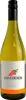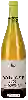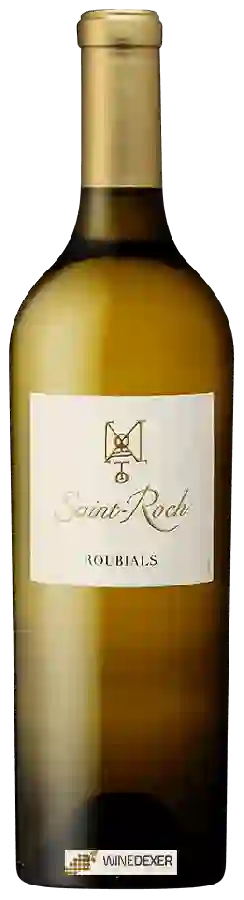
Château Saint-RochRoubials Blanc
 White wine



In the mouth this white wine is a powerful.
This wine generally goes well with vegetarian, poultry or lean fish.
The Roubials Blanc of the Château Saint-Roch is in the top 30 of wines of Languedoc.

Taste structure of the Roubials Blanc from the Château Saint-Roch
Light | Bold | |
Dry | Sweet | |
Soft | Acidic |
In the mouth the Roubials Blanc of Château Saint-Roch in the region of Languedoc-Roussillon is a powerful.
Wine flavors and olphactive analysis

On the nose the Roubials Blanc of Château Saint-Roch in the region of Languedoc-Roussillon often reveals types of flavors of tropical, pear or honey and sometimes also flavors of melon, earth or tree fruit.
Food and wine pairings with Roubials Blanc
Pairings that work perfectly with Roubials Blanc



Original food and wine pairings with Roubials Blanc


The Roubials Blanc of Château Saint-Roch matches generally quite well with dishes of pasta, vegetarian or poultry such as recipes of trofie ( pasta ) paradiso, nanie's diced ham quiche or stuffed eggplant (with vegetables or mixed).
Details and technical informations about Château Saint-Roch's Roubials Blanc.
Discover the grape variety: Fetească regală
Lively, aromatic whites to drink young, with a pale golden robe and an airy palate, with signature aromas of citrus (lemon, grapefruit), white flowers (acacia), green apple and fresh herbal notes. Also as sparkling and sweet wines. One of the most planted varieties in Romania, producing accessible dry and medium-dry wines across all regions. Romanian white variety obtained in 1920 at Daneș (fetească albă × grasă de Cotnari).
Last vintages of this wine
The best vintages of Roubials Blanc from Château Saint-Roch are 2016
Informations about the Château Saint-Roch
The Château Saint-Roch is one of of the world's great estates. It offers 31 wines for sale in the of Languedoc to come and discover on site or to buy online.

The wine region of Languedoc
Sunny, generous southern reds: spicy, peppery Syrah, round, candied Grenache (ripe fruit, garrigue), deep Mourvèdre, structured Carignan, supple Cinsault. From robust Corbières and Minervois to fresher Terrasses du Larzac, via Faugères on schist or taut Pic Saint-Loup. Lively, iodised Picpoul de Pinet whites (oysters), ample Roussanne and Marsanne. 14 sub-appellations, ~10,000 ha in regional AOC.
The wine region of Languedoc-Roussillon
Largest single French vineyard, dominated by sunny, generous reds. Spicy Syrah, candied Grenache (ripe fruit, garrigue), structured Carignan, deep Mourvèdre, supple Cinsault. Stars: structured Corbières, Minervois, Faugères, Saint-Chinian; round Côtes-du-Roussillon. Legendary vins doux naturels: Banyuls and Maury (fortified Grenache) with notes of cocoa, fig, prune.
The word of the wine: Size
Cutting of shoots to regulate and balance the growth of the vine in order to control productivity.