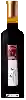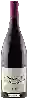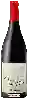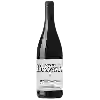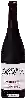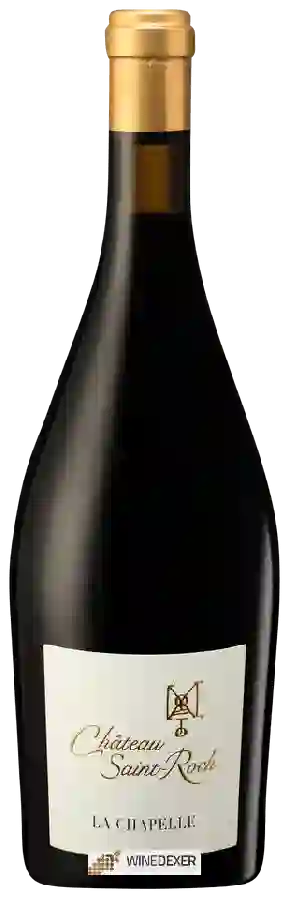
Château Saint-RochLa Chapelle
 Red wine


In the mouth this red wine is a powerful with a nice balance between acidity and tannins.
This wine generally goes well with beef, veal or pasta.
The La Chapelle of the Château Saint-Roch is in the top 10 of wines of Côtes du Roussillon Villages.

Taste structure of the La Chapelle from the Château Saint-Roch
Light | Bold | |
Smooth | Tannic | |
Dry | Sweet | |
Soft | Acidic |
In the mouth the La Chapelle of Château Saint-Roch in the region of Languedoc-Roussillon is a powerful with a nice balance between acidity and tannins.
Wine flavors and olphactive analysis



On the nose the La Chapelle of Château Saint-Roch in the region of Languedoc-Roussillon often reveals types of flavors of blackberry, minerality or vanilla and sometimes also flavors of pepper, non oak or earth.
Food and wine pairings with La Chapelle
Pairings that work perfectly with La Chapelle



Original food and wine pairings with La Chapelle
The La Chapelle of Château Saint-Roch matches generally quite well with dishes of beef, pasta or veal such as recipes of korean bibimbap, pork filet mignon with foie gras and rosemary or flank steak with shallots in red wine sauce.
Details and technical informations about Château Saint-Roch's La Chapelle.
Discover the grape variety: Completer
Structured, aromatic dry whites with a pale golden hue, ample body and sharp acidity; signature aromas of almond, honey, white flowers (acacia), white-fleshed fruits (pear) and alpine mineral notes. Fine ageing potential. Star of the Bündner Herrschaft region around Malans, one of Switzerland's most precious and ancient heritage grapes. Native Swiss white grape from the canton of Graubünden, extremely rare.
Last vintages of this wine
The best vintages of La Chapelle from Château Saint-Roch are 2015, 2012, 2014
Informations about the Château Saint-Roch
The Château Saint-Roch is one of of the world's greatest estates. It offers 31 wines for sale in the of Côtes du Roussillon Villages to come and discover on site or to buy online.

The wine region of Côtes du Roussillon Villages
Sunny cru of the Pyrénées-Orientales (above Côtes du Roussillon): signature Grenache, Syrah, Mourvèdre and Carignan as exclusive king reds - concentrated and fleshy with notes of ripe black fruits (blackberry, blackcurrant, plum), garrigue, cocoa, spices, liquorice and a mineral touch, coated tannins and a long finish (12. 5° min). Communal mentions (Tautavel, Lesquerde, Caramany, Latour). AOC (1977), schist, gneiss and limestone, hot windy Mediterranean climate.
The wine region of Languedoc-Roussillon
Largest single French vineyard, dominated by sunny, generous reds. Spicy Syrah, candied Grenache (ripe fruit, garrigue), structured Carignan, deep Mourvèdre, supple Cinsault. Stars: structured Corbières, Minervois, Faugères, Saint-Chinian; round Côtes-du-Roussillon. Legendary vins doux naturels: Banyuls and Maury (fortified Grenache) with notes of cocoa, fig, prune.
The word of the wine: Petiole
Stem of the leaf, connecting the leaf blade to the stem.