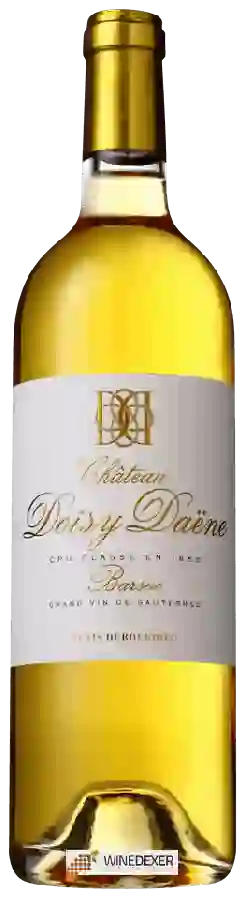
Château Doisy-DubrocaBarsac (Grand Cru Classé)
 Sweet wine


In the mouth this sweet wine is a powerful with a good balance between acidity and sweetness.
This wine generally goes well with fruity desserts and blue cheese.
The Barsac (Grand Cru Classé) of the Château Doisy-Dubroca is in the top 20 of wines of Barsac.
Taste structure of the Barsac (Grand Cru Classé) from the Château Doisy-Dubroca
Light | Bold | |
Dry | Sweet | |
Soft | Acidic |
In the mouth the Barsac (Grand Cru Classé) of Château Doisy-Dubroca in the region of Bordeaux is a powerful with a good balance between acidity and sweetness.


Food and wine pairings with Barsac (Grand Cru Classé)
Pairings that work perfectly with Barsac (Grand Cru Classé)

Original food and wine pairings with Barsac (Grand Cru Classé)
The Barsac (Grand Cru Classé) of Château Doisy-Dubroca matches generally quite well with dishes of fruity desserts or blue cheese such as recipes of the coughing cat's apple crumble or avocados with roquefort cheese.
Details and technical informations about Château Doisy-Dubroca's Barsac (Grand Cru Classé).
Discover the grape variety: Albanella
Last vintages of this wine
The best vintages of Barsac (Grand Cru Classé) from Château Doisy-Dubroca are 2009, 2010
Informations about the Château Doisy-Dubroca
The Château Doisy-Dubroca is one of of the world's greatest estates. It offers 3 wines for sale in the of Barsac to come and discover on site or to buy online.

The wine region of Barsac
Bordeaux AOC of the Sauternais (left bank, unique Ciron-Garonne microclimate, gravelly or clay-limestone soils; may be labelled Barsac or Sauternes). Sémillon dominates the sweet whites (thick skins ideal for botrytis), complemented by Sauvignon Blanc and Sauvignon Gris. Signature profile: ripe fruits (apricot, peach), honey, acacia; rich, unctuous, powerful palate with 50+ botrytis aromas. Decades-long aging potential; harvested in successive tries.
The wine region of Bordeaux
World-renowned age-worthy reds, led by round Merlot (plum, black fruit) or firm Cabernet Sauvignon (blackcurrant, cedar, graphite), blended with Cabernet Franc and Petit Verdot for tannic structure. Structured Médoc and Graves, velvety Saint-Émilion and Pomerol. Also crisp dry whites (Sauvignon/Sémillon) and opulent sweet Sauternes with honey and candied fruit. A 110,000 ha Gironde vineyard, 65 appellations, cradle of the 1855 classified growths.
The word of the wine: Alcoholic fermentation
Transformation of sugars into alcohol under the effect of yeast. These yeasts exist in their natural state in the vineyards and in the cellars. Artificial seeding with selected yeasts is however very often practiced.