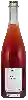
Winery ChastagnacSyrah Rosé
 Pink wine



This wine generally goes well with beef, lamb or mature and hard cheese.
Food and wine pairings with Syrah Rosé
Pairings that work perfectly with Syrah Rosé



Original food and wine pairings with Syrah Rosé

The Syrah Rosé of Winery Chastagnac matches generally quite well with dishes of beef, lamb or spicy food such as recipes of sweet and sour turkish dumpling soup (eksili köfte), lamb mice confit and melting carrots or scallops with cream.
Details and technical informations about Winery Chastagnac's Syrah Rosé.
Discover the grape variety: Nosiola
This is an ancient indigenous variety that has been cultivated for a long time in the north-east of Italy, particularly in the Trentino-Alto Adige region, although it has been somewhat neglected. It is related to rèze and groppello bianco, but should not be confused with veneto durella. The Nosiola can be found in Spain, Australia, ... in France it is almost unknown.
Last vintages of this wine
The best vintages of Syrah Rosé from Winery Chastagnac are 0
Informations about the Winery Chastagnac
The Winery Chastagnac is one of of the world's greatest estates. It offers 4 wines for sale in the of Vin de France to come and discover on site or to buy online.

The wine region of Vin de France
Vin de France is the most basic level of quality for wines from France. These are generally uncomplicated everyday drinks - most often blends, but perhaps also Varietal wines based on a well-known Grape variety such as Cabernet Sauvignon, Merlot, Chardonnay or Sauvignon Blanc. Wines from France are those that do not meet the criteria stipulated by the Protected Designation of Origin (PDO) or Protected Geographical Indication (PGI) laws (see information on French wine labels). This may be because the vineyards are outside the delimited production areas or because the grape varieties or winemaking techniques used do not conform to the rules of the local appellations.
The word of the wine: Presses
The juice that results from pressing the grapes after fermentation. At the end of the maceration, the vats are emptied, the first juice obtained is called the free-run wine and the marc remaining at the bottom of the vat is then pressed to give the press wine. We say more quickly "the presses". Their quality varies according to the vintage and the maceration. A too vigorous extraction releases the tannins of pips and the wine of press can then prove to be very astringent. Often the winemaker raises it separately, deciding later whether or not to incorporate it totally or partially into the grand vin.