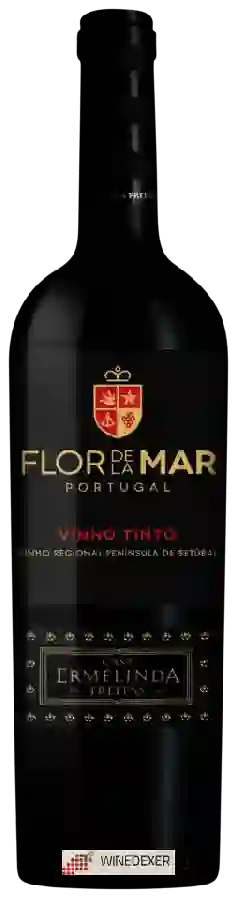
Winery Casa Ermelinda FreitasFlor de La Mar
 Red wine


In the mouth this red wine is a powerful with a nice freshness.
This wine generally goes well with poultry, beef or veal.
The Flor de La Mar of the Winery Casa Ermelinda Freitas is in the top 50 of wines of Península de Setúbal.

Taste structure of the Flor de La Mar from the Winery Casa Ermelinda Freitas
Light | Bold | |
Smooth | Tannic | |
Dry | Sweet | |
Soft | Acidic |
In the mouth the Flor de La Mar of Winery Casa Ermelinda Freitas in the region of Península de Setúbal is a powerful with a nice freshness.
Wine flavors and olphactive analysis


On the nose the Flor de La Mar of Winery Casa Ermelinda Freitas in the region of Península de Setúbal often reveals types of flavors of non oak, oak or spices.
Food and wine pairings with Flor de La Mar
Pairings that work perfectly with Flor de La Mar



Original food and wine pairings with Flor de La Mar

The Flor de La Mar of Winery Casa Ermelinda Freitas matches generally quite well with dishes of beef, pasta or veal such as recipes of beef stew, marco's pasta with bacon or veal shank in a pot au feu with star anise.
Details and technical informations about Winery Casa Ermelinda Freitas's Flor de La Mar.
Discover the grape variety: Valensi
Light, simply fruity reds with a pale ruby colour, soft tannins and a light palate with moderate acidity, featuring understated aromas of red fruits. Discreet Provençal profile. Nearly extinct, preserved in INRAE varietal collections for its heritage value; it bears witness to the pre-phylloxera ampelographic diversity of southern France and is among the patrimonial varieties under study. Rare French black variety, once grown in Provence.
Last vintages of this wine
The best vintages of Flor de La Mar from Winery Casa Ermelinda Freitas are 2017, 2019, 0, 2018
Informations about the Winery Casa Ermelinda Freitas
The Winery Casa Ermelinda Freitas is one of of the world's great estates. It offers 106 wines for sale in the of Península de Setúbal to come and discover on site or to buy online.

The wine region of Península de Setúbal
Portuguese peninsula south of Lisbon between the Tagus and Sado estuaries. World-renowned speciality: Moscatel de Setúbal, a golden fortified sweet wine with signature notes of candied orange, dried apricot, honey, fig, currant and sweet spices, long ageing — the rare Roxo version has more floral notes. Also fruity, supple Castelão reds (64%) (blackberry, plum), perfumed Touriga Nacional. Oceanic climate.
The word of the wine: Maceration
Prolonged contact and exchange between the juice and the grape solids, especially the skin. Not to be confused with the time of fermentation, which follows maceration. The juice becomes loaded with colouring matter and tannins, and acquires aromas. For a rosé, the maceration is short so that the colour does not "rise" too much. For white wines too, a "pellicular maceration" can be practised, which allows the wine to acquire more fat.