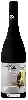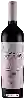
Winery ManzContador de Estorias Reserva
 Red wine


This wine is a blend of 2 varietals which are the Petit Verdot and the Touriga nacional.
In the mouth this red wine is a powerful with a nice balance between acidity and tannins.
This wine generally goes well with poultry, beef or veal.

Taste structure of the Contador de Estorias Reserva from the Winery Manz
Light | Bold | |
Smooth | Tannic | |
Dry | Sweet | |
Soft | Acidic |
In the mouth the Contador de Estorias Reserva of Winery Manz in the region of Península de Setúbal is a powerful with a nice balance between acidity and tannins.
Wine flavors and olphactive analysis

Food and wine pairings with Contador de Estorias Reserva
Pairings that work perfectly with Contador de Estorias Reserva



Original food and wine pairings with Contador de Estorias Reserva

The Contador de Estorias Reserva of Winery Manz matches generally quite well with dishes of beef, pasta or veal such as recipes of mexican beef tacos, leek and salmon lasagna or meatballs catalan style.
Details and technical informations about Winery Manz's Contador de Estorias Reserva.
Discover the grape variety: Petit Verdot
Dark, full-bodied reds with tight tannins and inky colour, showing aromas of blackberry, violet, gentle spice, liquorice and mentholated balsamic notes. Contributes colour, structure and aromatic freshness to great Médoc blends (Palmer, Léoville-Las Cases) where it remains a minority. Also vinified as a single variety in Spain (La Mancha), California, Australia and Argentina. A late-ripening Bordeaux variety.
Last vintages of this wine
The best vintages of Contador de Estorias Reserva from Winery Manz are 2011, 2016, 2015, 0 and 2013.
Informations about the Winery Manz
The Winery Manz is one of of the world's greatest estates. It offers 14 wines for sale in the of Península de Setúbal to come and discover on site or to buy online.

The wine region of Península de Setúbal
Portuguese peninsula south of Lisbon between the Tagus and Sado estuaries. World-renowned speciality: Moscatel de Setúbal, a golden fortified sweet wine with signature notes of candied orange, dried apricot, honey, fig, currant and sweet spices, long ageing — the rare Roxo version has more floral notes. Also fruity, supple Castelão reds (64%) (blackberry, plum), perfumed Touriga Nacional. Oceanic climate.
The word of the wine: Ugni blanc
White grape variety of Italian origin, and the main white variety grown in France. Its large bunches give fine, light and lively wines, suitable for distillation: today it is the main variety for making cognac and armagnac. Ugni blanc, which is a little richer in alcohol when grown in Mediterranean regions, is used in the blending of the Provence and Corsica appellations, often in association with other grape varieties that bring aromas and structure, such as clairette, grenache blanc or sauvignon. Ugni blanc is also used, on a secondary basis, in the production of certain white wines in Gironde (AOC Bordeaux, Entre-deux-Mers, etc.).