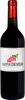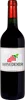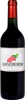
Winery Cantina ValdasoBarbolano
 Red wine
This wine is a blend of 3 varietals which are the Cabernet-Sauvignon, the Sangiovese and the Merlot.
In the mouth this red wine is a .
This wine generally goes well with poultry, beef or veal.
Taste structure of the Barbolano from the Winery Cantina Valdaso
Light | Bold | |
Smooth | Tannic | |
Dry | Sweet | |
Soft | Acidic |
In the mouth the Barbolano of Winery Cantina Valdaso in the region of Marche is a .
Food and wine pairings with Barbolano
Pairings that work perfectly with Barbolano



Original food and wine pairings with Barbolano

The Barbolano of Winery Cantina Valdaso matches generally quite well with dishes of beef, pasta or veal such as recipes of hungarian goulash, pasta with tuna or veal chops au gratin.
Details and technical informations about Winery Cantina Valdaso's Barbolano.
Discover the grape variety: Cabernet-Sauvignon
Cabernet-Sauvignon noir is a grape variety that originated in France (Bordeaux). It produces a variety of grape specially used for wine making. It is rare to find this grape to eat on our tables. This variety of grape is characterized by small bunches, and small grapes. Cabernet-Sauvignon noir can be found in many vineyards: South-West, Loire Valley, Languedoc & Roussillon, Cognac, Bordeaux, Armagnac, Rhone Valley, Provence & Corsica, Savoie & Bugey, Beaujolais.
Informations about the Winery Cantina Valdaso
The Winery Cantina Valdaso is one of of the world's greatest estates. It offers 9 wines for sale in the of Marche to come and discover on site or to buy online.

The wine region of Marche
Marche (or Le Marche; pronounced Mar-kay) is a region in eastern CentralItaly. It is most associated with white wines made from Trebbiano and Verdicchio grapes. Marche occupies a roughly triangular area. Its longer sides are formed by the Apennine Mountains to the west and the Adriatic Sea to the east.
The word of the wine: PDO
Protected Designation of Origin - equivalent to the term "controlled designation of origin" in European regulations.