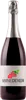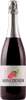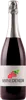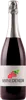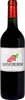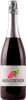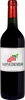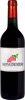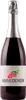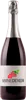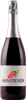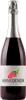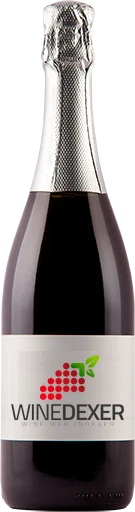
Winery Ca' de' MediciPiccolo San Prospero Lambrusco Scuro
 Sparkling wine


This wine generally goes well with pork, poultry or rich fish (salmon, tuna etc).
Food and wine pairings with Piccolo San Prospero Lambrusco Scuro
Pairings that work perfectly with Piccolo San Prospero Lambrusco Scuro



Original food and wine pairings with Piccolo San Prospero Lambrusco Scuro


The Piccolo San Prospero Lambrusco Scuro of Winery Ca' de' Medici matches generally quite well with dishes of pork, rich fish (salmon, tuna etc) or mature and hard cheese such as recipes of croque-monsieur, bacalhau com natas or vegetable flan.
Details and technical informations about Winery Ca' de' Medici's Piccolo San Prospero Lambrusco Scuro.
Discover the grape variety: Mérille
Originally from the Tarn-et-Garonne, the merille is a member of the cotoïdes family. It has long occupied the vineyards of Bergerac. It is often planted with négrette N or côt N. Nowadays, it is only grown on a hundred hectares in all. The young leaves of the Merille are heart-shaped. Its bunches are larger than average. The berries are bluish-black in colour and are also large and tightly packed. Merillas are associated with a regular and high production. It is often exposed to attacks by grape worms, leafhoppers and mites. It also fears grey rot but is not very sensitive to powdery mildew and mildew. This variety has 3 approved clones, not yet multiplied, namely 790, 445 and 444. It does not like soils with excessive humidity. It buds early and ripens later. Merille produces a light, not very aromatic, flat and simple wine.
Last vintages of this wine

The best vintages of Piccolo San Prospero Lambrusco Scuro from Winery Ca' de' Medici are 2016, 2008, 0, 2017
Informations about the Winery Ca' de' Medici
The Winery Ca' de' Medici is one of of the world's greatest estates. It offers 40 wines for sale in the of Emilia-Romagna to come and discover on site or to buy online.

The wine region of Emilia-Romagna
Romagna/emilia">Emilia-Romagna is a Rich and fertile region in Northern Italy, and one of the country's most prolific wine-producing regions, with over 58,000 hectares (143,320 acres) of vines in 2010. It is 240 kilometers (150 miles) wide and stretches across almost the entire northern Italian peninsula, sandwiched between Tuscany to the South, Lombardy and Veneto to the north and the Adriatic Sea to the east. Nine miles of Liguria is all that separates Emilia-Romagna from the Ligurian Sea, and its uniqueness as the only Italian region with both an east and west coast. Emilia-Romagna's wine-growing heritage dates back to the seventh century BC, making it one of the oldest wine-growing regions in Italy.
The word of the wine: Reims Mountain
Between Épernay and Reims, a large limestone massif with varied soils and exposure where pinot noir reigns supreme. Ambonnay, Bouzy, Verzenay, Verzy, etc., are equivalent to the Burgundian Gevrey-Chambertin and Vosne-Romanée. There are also great Chardonnays, which are rarer (Mailly, Marmery, Trépail, Villers).