The Winery Boschendal of Western Cape
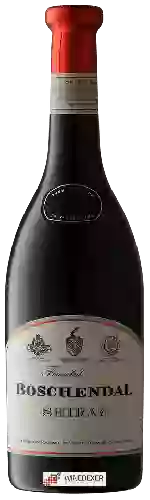
Winery Boschendal
The winery offers 91 different wines
3.7


Note - 1Note - 1Note - 1Note - 0.5Note - 0
Its wines get an average rating of 3.7.
This estate is part of the DGB (Douglas Green Bellingham).
It is ranked in the top 28 of the estates of Western Cape.
It is located in Western Cape

The Winery Boschendal is one of the world's great estates. It offers 91 wines for sale in of Western Cape to come and discover on site or to buy online.
Top Winery Boschendal wines

Looking for the best Winery Boschendal wines in Western Cape among all the wines in the region? Check out our tops of the best red, white or effervescent Winery Boschendal wines. Also find some food and wine pairings that may be suitable with the wines from this area. Learn more about the region and the Winery Boschendal wines with technical and enological descriptions.

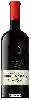
The top red wines of Winery Boschendal

Food and wine pairings with a red wine of Winery Boschendal

How Winery Boschendal wines pair with each other generally quite well with dishes of beef, lamb or game (deer, venison) such as recipes of monkfish tail with white butter, gypsy sauce or blanquette of rabbit with riesling and chanterelles.

Organoleptic analysis of red wines of Winery Boschendal

On the nose the red wine of Winery Boschendal. often reveals types of flavors of cherry, oaky or smoke and sometimes also flavors of blackberry, blueberry or tobacco. In the mouth the red wine of Winery Boschendal. is a powerful with a nice balance between acidity and tannins.

The best vintages in the red wines of Winery Boschendal

  • 2000With an average score of 4.10/5
  • 2003With an average score of 4.08/5
  • 2004With an average score of 4.04/5
  • 2006With an average score of 4.00/5
  • 2019With an average score of 3.91/5
  • 2008With an average score of 3.84/5

The grape varieties most used in the red wines of Winery Boschendal.

  • Shiraz/Syrah
  • Cabernet Sauvignon
  • Pinot Noir
  • Petit Verdot
  • Merlot
  • Cabernet Franc

Discovering the wine region of Western Cape

The Western Cape is home to the vast majority of the South African wine industry, and the country's two most famous wine regions, Stellenbosch and Paarl. The city of Cape Town serves as the epicenter of the Cape Winelands, a mountainous, biologically diverse area in the south-western corner of the African continent. A wide variety of wines are produced here. Wines from the Shiraz and Pinotage">Pinotage grape varieties can be fresh and juicy or Full-bodied and gutsy.

The Western Cape's Elegant, ageworthy Cabernet Sauvignon wines and Bordeaux Blends were at the vanguard as exports recommenced in the mid-1990s, while Burgundy-style Pinot Noir and Chardonnay from Walker Bay are gaining global acclaim, and cool-climate style Sauvignon Blanc from Darling and Overberg is rivaling that made in any other New World country. The Western Cape's wine regions stretch 300 kilomers (185 miles) from Cape Town to the Mouth of the Olifants River in the North, and 360km (220 miles) to Mossel Bay in the east. Areas under Vine are rarely more than 160km (100 miles) from the coast. Further inland, the influence of the semi-arid Great Karoo Desert takes over.

The climate can be cool and rainy (as in Cape Point and Walker Bay) but is more often than not Mediterranean in nature. The Western Cape is littered with spectacular mountain ranges that form the Cape Fold belt. These are extremely important for viticulture across the whole region, contributing soils and mesoclimates ideal for the production of premium wines. Of particular importance are the Boland Mountains, which form the eastern border of the Coastal Region, and the Langeberg range, which separates the Breede River Valley from the Klein Karoo semi-desert.

The top white wines of Winery Boschendal

Food and wine pairings with a white wine of Winery Boschendal

How Winery Boschendal wines pair with each other generally quite well with dishes of shellfish, vegetarian or goat cheese such as recipes of spaghetti with squid ink (italy), zucchini quiche or chicken roulade with goat cheese.

Organoleptic analysis of white wines of Winery Boschendal

On the nose the white wine of Winery Boschendal. often reveals types of flavors of pineapple, cream or grapefruit and sometimes also flavors of oaky, tropical or citrus. In the mouth the white wine of Winery Boschendal. is a powerful with a nice freshness.

The best vintages in the white wines of Winery Boschendal

  • 2005With an average score of 4.20/5
  • 2007With an average score of 4.00/5
  • 2010With an average score of 3.83/5
  • 2009With an average score of 3.80/5
  • 2011With an average score of 3.77/5
  • 2015With an average score of 3.77/5

The grape varieties most used in the white wines of Winery Boschendal.

  • Chardonnay
  • Sauvignon Blanc
  • Chenin Blanc
  • Riesling
  • Viognier
  • Pinot Noir

Discover the grape variety: Chardonnay

The white Chardonnay is a grape variety that originated in France (Burgundy). It produces a variety of grape specially used for wine making. It is rare to find this grape to eat on our tables. This variety of grape is characterized by small bunches, and small grapes. White Chardonnay can be found in many vineyards: South West, Burgundy, Jura, Languedoc & Roussillon, Cognac, Bordeaux, Beaujolais, Savoie & Bugey, Loire Valley, Champagne, Rhone Valley, Armagnac, Lorraine, Alsace, Provence & Corsica.

The top pink wines of Winery Boschendal

Food and wine pairings with a pink wine of Winery Boschendal

How Winery Boschendal wines pair with each other generally quite well with dishes of beef, lamb or game (deer, venison) such as recipes of chinese noodles with beef, lamb in spicy sauce or duck breast with peaches and spices.

Organoleptic analysis of pink wines of Winery Boschendal

On the nose the pink wine of Winery Boschendal. often reveals types of flavors of non oak, earth or microbio and sometimes also flavors of vegetal, oak or tree fruit.

The best vintages in the pink wines of Winery Boschendal

  • 2010With an average score of 4.20/5
  • 2020With an average score of 3.90/5
  • 2018With an average score of 3.75/5
  • 2012With an average score of 3.74/5
  • 2015With an average score of 3.70/5
  • 0With an average score of 3.67/5

The grape varieties most used in the pink wines of Winery Boschendal.

  • Shiraz/Syrah
  • Cabernet Sauvignon
  • Merlot
  • Pinotage
  • Cinsaut

The word of the wine: Smell

A generic term for both unpleasant and pleasant odours known as perfumes. In the world of tasting, the term aroma is more commonly used.

The top sparkling wines of Winery Boschendal

Food and wine pairings with a sparkling wine of Winery Boschendal

How Winery Boschendal wines pair with each other generally quite well with dishes of veal, pork or game (deer, venison) such as recipes of roast veal with chanterelles and cream, beef stew or my grandmother's rabbit stew.

Organoleptic analysis of sparkling wines of Winery Boschendal

On the nose the sparkling wine of Winery Boschendal. often reveals types of flavors of non oak, earth or microbio and sometimes also flavors of vegetal, oak or tree fruit.

The best vintages in the sparkling wines of Winery Boschendal

  • 2018With an average score of 4.08/5
  • 2007With an average score of 4.06/5
  • 2014With an average score of 4.03/5
  • 2016With an average score of 4.00/5
  • 2006With an average score of 4.00/5
  • 2008With an average score of 3.99/5

The grape varieties most used in the sparkling wines of Winery Boschendal.

  • Chardonnay
  • Pinot Noir

Discover the grape variety: Colombard

Colombard is one of the oldest grape varieties in the Charentes. This golden white grape variety is a cross between Chenin and Gouais. The young leaves of colombard are yellow with bronze patches. The adult leaves may be three-lobed or whole, depending on the variety. Its branches are cottony. The bunches of this variety are thick and cylindrical. Its elliptical berries are medium-sized. They change color until they ripen, ranging from greenish white to golden yellow. Colombard is associated with an average budding. It is particularly susceptible to leafhoppers, grape worms, mites, mildew, powdery mildew and gray mold. It is also sensitive to water stress, but is not very sensitive to wind. It ripens late in the second half of the year. There are a dozen approved clones of Colombard, the best known of which are 608, 607 and 606. This variety produces a full-bodied, fine white wine. Aromas of lime, nectarine, boxwood, citrus and exotic fruits are released.
The top sweet wines of Winery Boschendal

Food and wine pairings with a sweet wine of Winery Boschendal

How Winery Boschendal wines pair with each other generally quite well with dishes of beef, lamb or pork such as recipes of grandma melanie's cassoulet, meatballs catalan style or vegetable planter.

Organoleptic analysis of sweet wines of Winery Boschendal

On the nose the sweet wine of Winery Boschendal. often reveals types of flavors of non oak, earth or microbio and sometimes also flavors of oak, tree fruit or spices.

The best vintages in the sweet wines of Winery Boschendal

  • 2016With an average score of 4.30/5
  • 2012With an average score of 4.20/5
  • 2017With an average score of 4.10/5
  • 2015With an average score of 4.10/5
  • 2013With an average score of 4.10/5
  • 0With an average score of 4.10/5

The grape varieties most used in the sweet wines of Winery Boschendal.

  • Shiraz/Syrah
  • Chenin Blanc
  • Viognier
  • Roussanne
  • Grenache Blanc

The word of the wine: Salmanazar

Bottle with a capacity of 9 litres.

Discover other wineries and winemakers neighboring the Winery Boschendal

Planning a wine route in the of Western Cape? Here are the wineries to visit and the winemakers to meet during your trip in search of wines similar to Winery Boschendal.

Discover the grape variety: Gewurztraminer

Gewurztraminer rosé is a grape variety that originated in France. It produces a variety of grape specially used for wine making. It is rare to find this grape to eat on our tables. This variety of vine is characterized by small bunches and small grapes. Gewurztraminer rosé can be found in many vineyards: Alsace, Loire Valley, Languedoc & Roussillon, Jura, Champagne, Lorraine, Provence & Corsica, Rhone Valley, Savoie & Bugey, Beaujolais, South West.