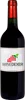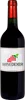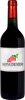
Weingut LeebKlassisch Zweigelt
 Red wine
In the mouth this red wine is a with a nice balance between acidity and tannins.
This wine generally goes well with beef, game (deer, venison) or lamb.
Taste structure of the Klassisch Zweigelt from the Weingut Leeb
Light | Bold | |
Smooth | Tannic | |
Dry | Sweet | |
Soft | Acidic |
In the mouth the Klassisch Zweigelt of Weingut Leeb in the region of Weinland is a with a nice balance between acidity and tannins.
Food and wine pairings with Klassisch Zweigelt
Pairings that work perfectly with Klassisch Zweigelt



Original food and wine pairings with Klassisch Zweigelt
The Klassisch Zweigelt of Weingut Leeb matches generally quite well with dishes of beef, lamb or game (deer, venison) such as recipes of marinated shrimp skewers with garlic, canned cassoulet or oven roasted rabbit with mustard.
Details and technical informations about Weingut Leeb's Klassisch Zweigelt.
Discover the grape variety: Zweigelt
Intraspecific crossing between the saint laurent and the limberger realized in 1922 and in Austria by Fritz Zweigelt (1888/1964) who named it rotburger. Very well known in Austria, it can be found in most Eastern countries, Japan, Germany, Great Britain, the Netherlands, Belgium, Switzerland, Italy, Canada, the United States, etc. In France, it is not very well known and yet this variety has interesting qualities when vinified as a single variety for both red and rosé wines. - Synonyms: rotburger, klosterneuburger, zweigelt blau, blauer-zweigelt in Germany, zweigeltrebe in Austria, Great Britain and the Czech Republic, blauer zwelgetrabe in Hungary, etc. (for all the synonyms of the grape varieties, click here !)
Informations about the Weingut Leeb
The Weingut Leeb is one of of the world's great estates. It offers 15 wines for sale in the of Burgenland to come and discover on site or to buy online.

The wine region of Burgenland
Burgenland is a large wine-producing region on the eastern border of Austria. Despite the country's image as the producer of some of the world's finest white wines, Austria is also home to a thriving red wine culture: Burgenland, with its sunny, continental summers, is the country's key red wine region, with its wines based mainly on the Blaufränkisch and Zweigelt grape varieties. Sweet, botrytized wines are also a specialty of the region, particularly in the Terroir surrounding the Neusiedlersee lake. The region occupies a narrow strip of land that runs from the Danube River down to Steiermark in the South.
The wine region of Weinland
Weinviertel DAC – whose name translates as "wine quarter" – is an appellation in Niederösterreich (Lower Austria). It is by far the largest Districtus Austriae Controllatus wine region in Austria. It was also the first Austrian wine region to be given that title, in 2002, with a DAC Reserve designation added in 2009. The designation applies only to white wines from the Grüner Veltliner Grape variety.
The word of the wine: Hautain (en)
Pruning of the vine in height.