The Winery Vinícola Weber of Rio Grande do Sul
The Winery Vinícola Weber is one of the best wineries to follow in Rio Grande do Sul.. It offers 24 wines for sale in of Rio Grande do Sul to come and discover on site or to buy online.
Looking for the best Winery Vinícola Weber wines in Rio Grande do Sul among all the wines in the region? Check out our tops of the best red, white or effervescent Winery Vinícola Weber wines. Also find some food and wine pairings that may be suitable with the wines from this area. Learn more about the region and the Winery Vinícola Weber wines with technical and enological descriptions.
How Winery Vinícola Weber wines pair with each other generally quite well with dishes of pork, rich fish (salmon, tuna etc) or shellfish such as recipes of sauerkraut of the sea in casserole, tuna gratin or squid from the mouth of the cavado river (portugal).
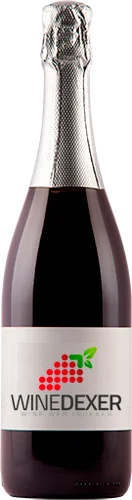
In the mouth the sparkling wine of Winery Vinícola Weber. is a powerful with a nice vivacity and a fine and pleasant bubble.
Rio Grande do Sul is Brazil's most prolific wine-producing state. It is located in the very South of the country along the Uruguayan and Argentinian borders.
The wine regions of Serra Gaucha, Campanha and Vale do Vinhedos can be found in this Part of the country. Soft, light red wines from a range of varieties such as Pinot Noir, Cabernet Sauvignon and Tannat are made here.
Rich white wines from Chardonnay and Viognier are also produced. However, it is the fresh, FruitySparkling wines made here in the Italian spumante style that have captured the most attention.
Today, Rio Grande do Sul is responsible for around 90 percent of Brazilian wine production, although only a small amount of this is quality wine made from Vitis vinifera grape varieties. Vitis labrusca and Hybrid grape varieties such as Isabella and Concord are better suited to the terroir here and still make up the majority of plantings.
The state lies some 650 kilometers (400 miles) southwest of the city of Sao Paulo and 300km (200 miles) North of the Uruguayan capital of Montevideo. Rio Grande do Sul (which means "great river of the south") is essentially a continuation of the pampas of Argentina and Uruguay.
These are fertile lowlands that consist mainly of low, rolling hills and plains. In the more northern part of the state, the landscapes rise into low mountain ranges that extend northward into the bordering state, Santa Catarina.
How Winery Vinícola Weber wines pair with each other generally quite well with dishes of beef, lamb or poultry such as recipes of pork tongue with bacon and onions, couscous chicken and merguez or pancake batter.
In the mouth the red wine of Winery Vinícola Weber. is a powerful with a nice balance between acidity and tannins.
Malbec, a high-yielding red grape variety, produces tannic and colourful wines. It is produced in different wine-growing regions and changes its name according to the grape variety. Called Auxerrois in Cahors, Malbec in Bordeaux, it is also known as Côt. 6,000 hectares of the Malbec grape are grown in France (in decline since the 1950s). Malbec is also very successful in Argentina. The country has become the world's leading producer of Malbec and offers wines with great potential.
How Winery Vinícola Weber wines pair with each other generally quite well with dishes such as recipes .
Soft wine with a dominant sweetness at the expense of freshness.
How Winery Vinícola Weber wines pair with each other generally quite well with dishes of sweet desserts such as recipes of birthday cake.
Planning a wine route in the of Rio Grande do Sul? Here are the wineries to visit and the winemakers to meet during your trip in search of wines similar to Winery Vinícola Weber.
The white Chardonnay is a grape variety that originated in France (Burgundy). It produces a variety of grape specially used for wine making. It is rare to find this grape to eat on our tables. This variety of grape is characterized by small bunches, and small grapes. White Chardonnay can be found in many vineyards: South West, Burgundy, Jura, Languedoc & Roussillon, Cognac, Bordeaux, Beaujolais, Savoie & Bugey, Loire Valley, Champagne, Rhone Valley, Armagnac, Lorraine, Alsace, Provence & Corsica.