The Winery Antonio Dias of Rio Grande do Sul
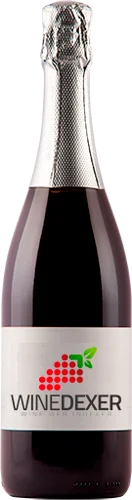
Winery Antonio Dias
The winery offers 11 different wines
3.4


Note - 1Note - 1Note - 1Note - 0Note - 0
Its wines get an average rating of 3.4.
It is ranked in the top 905 of the estates of Rio Grande do Sul.
It is located in Rio Grande do Sul

The Winery Antonio Dias is one of the best wineries to follow in Rio Grande do Sul.. It offers 11 wines for sale in of Rio Grande do Sul to come and discover on site or to buy online.
Top Winery Antonio Dias wines

Looking for the best Winery Antonio Dias wines in Rio Grande do Sul among all the wines in the region? Check out our tops of the best red, white or effervescent Winery Antonio Dias wines. Also find some food and wine pairings that may be suitable with the wines from this area. Learn more about the region and the Winery Antonio Dias wines with technical and enological descriptions.

The top sparkling wines of Winery Antonio Dias

Food and wine pairings with a sparkling wine of Winery Antonio Dias

How Winery Antonio Dias wines pair with each other generally quite well with dishes of pork, rich fish (salmon, tuna etc) or shellfish such as recipes of gloom and doom, cod and potato gratin or tagliatelle with scallops.

The best vintages in the sparkling wines of Winery Antonio Dias

  • 0With an average score of 3.35/5
  • 2008With an average score of 3.16/5

The grape varieties most used in the sparkling wines of Winery Antonio Dias.

  • Chardonnay
  • Sauvignon Blanc
  • Moscatel

Discovering the wine region of Rio Grande do Sul

Rio Grande do Sul is Brazil's most prolific wine-producing state. It is located in the very South of the country along the Uruguayan and Argentinian borders. The wine regions of Serra Gaucha, Campanha and Vale do Vinhedos can be found in this Part of the country. Soft, light red wines from a range of varieties such as Pinot Noir, Cabernet Sauvignon and Tannat are made here.

Rich white wines from Chardonnay and Viognier are also produced. However, it is the fresh, FruitySparkling wines made here in the Italian spumante style that have captured the most attention. Today, Rio Grande do Sul is responsible for around 90 percent of Brazilian wine production, although only a small amount of this is quality wine made from Vitis vinifera grape varieties. Vitis labrusca and Hybrid grape varieties such as Isabella and Concord are better suited to the terroir here and still make up the majority of plantings.

The state lies some 650 kilometers (400 miles) southwest of the city of Sao Paulo and 300km (200 miles) North of the Uruguayan capital of Montevideo. Rio Grande do Sul (which means "great river of the south") is essentially a continuation of the pampas of Argentina and Uruguay. These are fertile lowlands that consist mainly of low, rolling hills and plains. In the more northern part of the state, the landscapes rise into low mountain ranges that extend northward into the bordering state, Santa Catarina.

The top red wines of Winery Antonio Dias

Food and wine pairings with a red wine of Winery Antonio Dias

How Winery Antonio Dias wines pair with each other generally quite well with dishes of beef, lamb or poultry such as recipes of daube niçoise, sri lankan lamb rolls (mutton rolls) or yassa chicken (senegal).

Organoleptic analysis of red wines of Winery Antonio Dias

In the mouth the red wine of Winery Antonio Dias. is a powerful with a lot of tannins present in the mouth.

The best vintages in the red wines of Winery Antonio Dias

  • 2018With an average score of 3.70/5
  • 2013With an average score of 3.70/5
  • 2014With an average score of 3.70/5
  • 2011With an average score of 3.55/5
  • 0With an average score of 3.39/5
  • 2012With an average score of 3.26/5

The grape varieties most used in the red wines of Winery Antonio Dias.

  • Cabernet Sauvignon
  • Merlot
  • Pinot Noir
  • Tannat
  • Touriga Nacional

Discover the grape variety: Tannat

Tannat is a red grape variety from Béarn which belongs to the cotoïdes family. Present in several vineyards of France, it occupies nearly 3,000 ha. Its leaves are reddish with tan patches. Its bunches are either of normal size or larger. Its berries have a thin skin and are rounded. Its foliage has a swarthy appearance. This variety must be pruned long because it is vigorous. It likes sandy and gravelly soils. Tannat is often exposed to leafhoppers and mites. It is also somewhat susceptible to grey rot. It has 11 approved clones, including 474, 717 and 794. Once mature, this variety produces acidic, fruity, tannic, acidic and full-bodied wines. Various aromas emerge, notably tobacco, cinnamon and exotic wood. Tannat is rarely used alone. It is combined with iron-servadou to obtain a fruitier taste or with cabernet sauvignon to be more rounded.

The top sweet wines of Winery Antonio Dias

Food and wine pairings with a sweet wine of Winery Antonio Dias

How Winery Antonio Dias wines pair with each other generally quite well with dishes of beef such as recipes of kafta bil saniyeh (lebanese dish).

The best vintages in the sweet wines of Winery Antonio Dias

  • 0With an average score of 3.70/5

The grape varieties most used in the sweet wines of Winery Antonio Dias.

  • Tannat

The word of the wine: Harmonious

Balance of the different organoleptic elements of a wine. This harmony is linked to the typicity of each wine. The sweetness of a sweet wine is an element of its balance, whereas a Sancerre or a Chablis will be asked to be lively and dry.

Discover other wineries and winemakers neighboring the Winery Antonio Dias

Planning a wine route in the of Rio Grande do Sul? Here are the wineries to visit and the winemakers to meet during your trip in search of wines similar to Winery Antonio Dias.

Discover the grape variety: Sauvignon blanc

Originally from Bordeaux, Sauvignon, or Sauvignon Blanc, is reputed to be one of the best French grape varieties for white wine. It is a white grape variety, not to be confused with Sauvignon Gris and its pale yellow color, or with Cabernet Sauvignon which produces red wines. Particularly famous thanks to Sancerre, Sauvignon Blanc is cultivated as far as New Zealand, where it produces great wines whose reputation is well established.