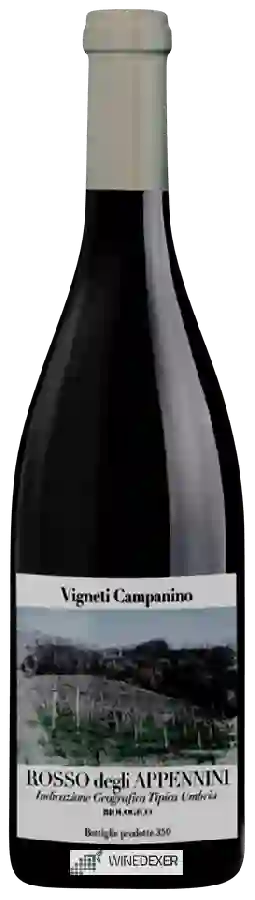
Winery Vigneti CampaninoRosso degli Appennini
 Red wine



In the mouth this red wine is a .
This wine generally goes well with poultry, beef or veal.

Taste structure of the Rosso degli Appennini from the Winery Vigneti Campanino
Light | Bold | |
Smooth | Tannic | |
Dry | Sweet | |
Soft | Acidic |
In the mouth the Rosso degli Appennini of Winery Vigneti Campanino in the region of Umbria is a .
Food and wine pairings with Rosso degli Appennini
Pairings that work perfectly with Rosso degli Appennini



Original food and wine pairings with Rosso degli Appennini

The Rosso degli Appennini of Winery Vigneti Campanino matches generally quite well with dishes of beef, pasta or veal such as recipes of beef tongue with pickle sauce, spaghetti all 'amatriciana or veal tagine with carrots.
Details and technical informations about Winery Vigneti Campanino's Rosso degli Appennini.
Discover the grape variety: Vespolina
Structured, aromatic reds with a deep ruby colour, firm tannins and a dense palate showing cherry, raspberry, black pepper, spices and balsamic alpine notes. Fine ageing potential in the Piedmontese style. A traditional component of blends with Nebbiolo in Ghemme DOCG and Gattinara DOCG, it defines the great reds of the Novarese.
Last vintages of this wine
The best vintages of Rosso degli Appennini from Winery Vigneti Campanino are 2015, 0
Informations about the Winery Vigneti Campanino
The Winery Vigneti Campanino is one of of the world's greatest estates. It offers 21 wines for sale in the of Umbria to come and discover on site or to buy online.

The wine region of Umbria
"Green heart" of Italy, cradle of Sagrantino: exceptional tannic red in Sagrantino di Montefalco DOCG, dense and concentrated with notes of blackberry, candied plum, liquorice, spice and leather, powerful tannins and long ageing. Suppler Sangiovese in blends, Cabernet and Merlot in Torgiano DOCG. Orvieto whites based on Grechetto and Trebbiano, full and almondy, from dry to sweet Muffato. ~13,000 ha between Tuscany and Lazio.
The word of the wine: Oenology
The science of the oenologist, which is essentially concerned with the elaboration and maturation of wines.


