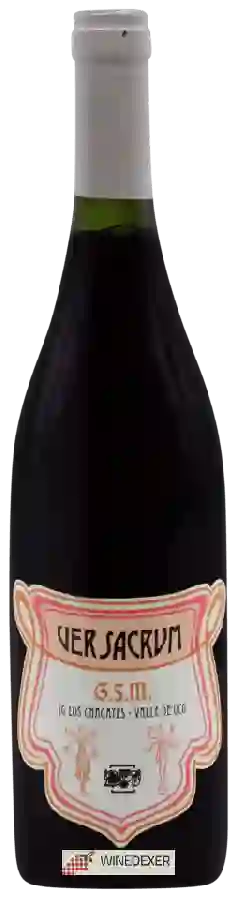
Winery Ver SacrumGSM
 Red wine



This wine generally goes well with beef, lamb or mature and hard cheese.

Wine flavors and olphactive analysis





On the nose the GSM of Winery Ver Sacrum in the region of Mendoza often reveals types of flavors of earth, microbio or spices and sometimes also flavors of red fruit, black fruit.
Food and wine pairings with GSM
Pairings that work perfectly with GSM



Original food and wine pairings with GSM

The GSM of Winery Ver Sacrum matches generally quite well with dishes of beef, lamb or spicy food such as recipes of beef tongue with pickle sauce, lamb chops marinated with herbs or dal lentils with coconut milk.
Details and technical informations about Winery Ver Sacrum's GSM.
Discover the grape variety: Mourvèdre
Powerful, deep reds with firm tannins and dense texture, showing aromas of blackberry, leather, garrigue, black pepper, liquorice and animal notes (game, forest floor) with age. Star of Bandol AOC as a single variety and pillar of Châteauneuf-du-Pape, Gigondas and Costières blends. Also in GSM in Languedoc and Australia. A late-ripening variety of Spanish origin (Mataró/Monastrell).
Last vintages of this wine
The best vintages of GSM from Winery Ver Sacrum are 2018, 2016, 2017, 2014 and 0.
Informations about the Winery Ver Sacrum
The Winery Ver Sacrum is one of of the world's greatest estates. It offers 13 wines for sale in the of Mendoza to come and discover on site or to buy online.

The wine region of Mendoza
World capital of Malbec: powerful, deep reds with blackberry, plum, violet and sweet spice, round tannins and vivid fruit. Also firm Cabernet Sauvignon, supple, juicy Bonarda, aromatic floral white Torrontés. High-altitude vineyards (800-1,700 m) at the foot of the Andes, dry continental climate irrigated by glacial waters. ~80% of Argentine output across 150,000 ha.
The word of the wine: Classified growth
Place name or castle subject to a classification (Médoc classification of 1855, classified growths of Alsace...)