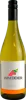
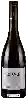
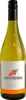
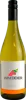
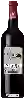
The Domaine des Cognettes of Pays Nantais of Loire Valley
The Domaine des Cognettes is one of the largest wineries in the world. It offers 32 wines for sale in of Pays Nantais to come and discover on site or to buy online.
Looking for the best Domaine des Cognettes wines in Pays Nantais among all the wines in the region? Check out our tops of the best red, white or effervescent Domaine des Cognettes wines. Also find some food and wine pairings that may be suitable with the wines from this area. Learn more about the region and the Domaine des Cognettes wines with technical and enological descriptions.
How Domaine des Cognettes wines pair with each other generally quite well with dishes of pork, rich fish (salmon, tuna etc) or vegetarian such as recipes of pasta carbonara almost like the real thing, endives with smoked salmon au gratin or summer tuna quiche.
On the nose the white wine of Domaine des Cognettes. often reveals types of flavors of citrus, minerality or lemon and sometimes also flavors of pear, stone or melon. In the mouth the white wine of Domaine des Cognettes. is a with a nice freshness.
The Pays Nantais is the region surrounding the city of Nantes, on the Atlantic coast of Brittany, France. The region covers an area of about 90 kilometres from east to west, between neighbouring Anjou and the Atlantic coast. Most of the production produces light, fresh white wines. The most famous of these is undoubtedly Muscadet, where the melon">Melon de Bourgogne grape dominates the plantings.
Muscadet wines are, in turn, produced under several different appellations, including Muscadet Sèvre-et-Maine. Melon de Bourgogne is not a particularly tasty grape variety, so without care in the Vineyard and careful Vinification, the wines are likely to be rather bland and Characterless. This is especially true in hot vintages, when the grapes tend to lose their Organoleptic complexity and their vital, characteristic Acidity. In order to glean as much flavour and character as possible from the grape must, many wines are left on the lees for weeks or even months.
How Domaine des Cognettes wines pair with each other generally quite well with dishes of beef, lamb or pork such as recipes of beef tagliata with truffle oil, lamb in a crown with spring vegetables or basque piperade.
On the nose the red wine of Domaine des Cognettes. often reveals types of flavors of cherry, red fruit or non oak and sometimes also flavors of earth, oak.
Pinot noir is an important red grape variety in Burgundy and Champagne, and its reputation is well known! Great wines such as the Domaine de la Romanée Conti elaborate their wines from this famous grape variety, and make it a great variety. When properly vinified, pinot noit produces red wines of great finesse, with a wide range of aromas depending on its advancement (fruit, undergrowth, leather). it is also the only red grape variety authorized in Alsace. Pinot Noir is not easily cultivated beyond our borders, although it has enjoyed some success in Oregon, the United States, Australia and New Zealand.
How Domaine des Cognettes wines pair with each other generally quite well with dishes of beef, veal or pork such as recipes of chinese fondue, roast veal in the oven or quiche without pastry.
Champagne made only from the Chardonnay grape. The expression has been somewhat overused by the intensive use made of it by certain large distributors of white table wines (or sparkling wines) who were thus seeking to promote their product.
How Domaine des Cognettes wines pair with each other generally quite well with dishes of lamb, rich fish (salmon, tuna etc) or poultry such as recipes of lamb crumble with oregano and feta cheese, leek and salmon lasagna or chicken wrap.
As its name suggests, the folle blanche is a white grape variety. Originally from the west of France, it was used to make Cognac and Armagnac brandies as early as the 17th century and was renowned for its finesse and fragrant nose. Replaced by Ugni Blanc following the phylloxera invasion, the folle blanche is now grown in small quantities. It is a grape variety with juicy, sweet, medium-sized bunches and berries with a white/green skin. Its worst enemy is grey rot. As it is an early variety and its buds come out early, it is particularly afraid of spring frosts. It likes short pruning, a method that limits the production of grapes but increases their quality. It also prefers mineral-rich soils, and its vineyards cover about 3,000 hectares. It is used in the production of the AOC Gros-plant du Pays nantais to produce a lively white wine with little alcohol but marked acidity.
Planning a wine route in the of Pays Nantais? Here are the wineries to visit and the winemakers to meet during your trip in search of wines similar to Domaine des Cognettes.
Gamay is a Burgundian grape variety that has existed since the 14th century. For fear of competition with the pinot noir of Burgundy, gamay was finally uprooted and planted in the Beaujolais region, from Mâcon to Lyon. These siliceous and granitic soils suit it perfectly, and it gives its best here. But it is also planted all over France, such as in Lorraine, in the Loire Valley, in Bugey, in Savoie and in Auvergne. Gamay is early and very productive and needs to be limited so that quality prevails over quantity. Short winter pruning of the shoots and high density of vines per hectare are the methods that allow it to produce very fruity, fresh and greedy red wines. Gamay is also very popular in red wine futures, and produces wines from the Beaujolais region with very interesting character and ageing potential. The AOCs Crémant-de-Bourgogne, Mâcon, Anjou, Touraine, Rosé de vallée de la Loire, Côtes-d'Auvergne, Saint-Pourçain, Bugey, Gaillac, Côtes du Luberon... and many vins de pays are proud of it. Today, about 36,000 hectares of Gamay are cultivated in France, including 22,000 hectares in Beaujolais.