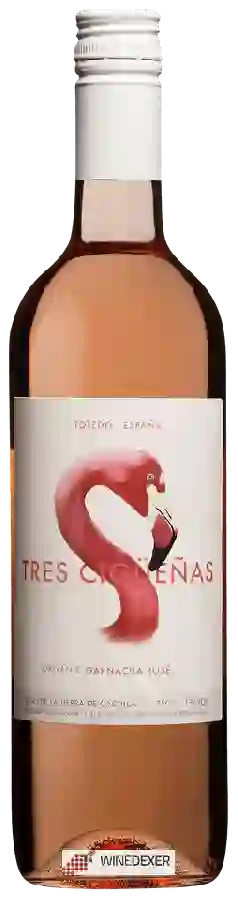
Winery Santa ElisaIII Cigüeñas Garnacha Rosé
 Pink wine



This wine generally goes well with pork, beef or lamb.
Food and wine pairings with III Cigüeñas Garnacha Rosé
Pairings that work perfectly with III Cigüeñas Garnacha Rosé



Original food and wine pairings with III Cigüeñas Garnacha Rosé

The III Cigüeñas Garnacha Rosé of Winery Santa Elisa matches generally quite well with dishes of beef, lamb or pork such as recipes of stewed beef heart, quick couscous or endives with ham (improved).
Details and technical informations about Winery Santa Elisa's III Cigüeñas Garnacha Rosé.
Discover the grape variety: Blanc vert
In the past, Blanc Vert was found in the vineyards of La Ville Dieu du Temple in the Tarn et Garonne and Fronton in the Haute Garonne, very often "mixed" with other grape varieties such as Negrette. Today, it is no longer present in the vineyards.
Last vintages of this wine
The best vintages of III Cigüeñas Garnacha Rosé from Winery Santa Elisa are 2019, 0
Informations about the Winery Santa Elisa
The Winery Santa Elisa is one of of the world's greatest estates. It offers 7 wines for sale in the of Castille to come and discover on site or to buy online.

The wine region of Castille
Castilla-La Mancha is a large region located South and east of the Spanish capital, Madrid. Inexpensive table wines are produced from a variety of Grapes. Higher quality wines are increasingly available, but the region is traditionally known as a source of low quality bulk wine. More than half of Spain's grapes are grown here.
The word of the wine: Silky
Said of a caressing wine with extremely fine tannins.