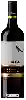
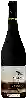
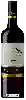
The Winery Santa Alicia of Maipo Valley of Central Valley
Winery Santa Alicia
The winery offers 50 different wines
3.4


Note - 1Note - 1Note - 1Note - 0Note - 0
Its wines get an average rating of 3.4.
It is ranked in the top 183 of the estates of Central Valley.
It is located in Maipo Valley in the region of Central Valley
Find the Winery Santa Alicia on Facebook

The Winery Santa Alicia is one of the best wineries to follow in Maipo Valley.. It offers 50 wines for sale in of Maipo Valley to come and discover on site or to buy online.
Top Winery Santa Alicia wines

Looking for the best Winery Santa Alicia wines in Maipo Valley among all the wines in the region? Check out our tops of the best red, white or effervescent Winery Santa Alicia wines. Also find some food and wine pairings that may be suitable with the wines from this area. Learn more about the region and the Winery Santa Alicia wines with technical and enological descriptions.

The top red wines of Winery Santa Alicia

Food and wine pairings with a red wine of Winery Santa Alicia

How Winery Santa Alicia wines pair with each other generally quite well with dishes of beef, lamb or game (deer, venison) such as recipes of millet with gruyere cheese, lamb chops with tarragon cream or rabbit fillet with mustard.

Organoleptic analysis of red wines of Winery Santa Alicia

On the nose the red wine of Winery Santa Alicia. often reveals types of flavors of non oak, earth or oak and sometimes also flavors of spices, red fruit or black fruit. In the mouth the red wine of Winery Santa Alicia. is a powerful.

The best vintages in the red wines of Winery Santa Alicia

  • 2007With an average score of 3.67/5
  • 2005With an average score of 3.64/5
  • 2006With an average score of 3.61/5
  • 2009With an average score of 3.58/5
  • 2017With an average score of 3.57/5
  • 2014With an average score of 3.51/5

The grape varieties most used in the red wines of Winery Santa Alicia.

  • Cabernet Sauvignon
  • Carménère
  • Merlot
  • Shiraz/Syrah
  • Petit Verdot
  • Cabernet Franc

Discovering the wine region of Maipo Valley

Maipo Valley is one of Chile's most important wine-producing regions. Located just South of the capital, Central-valley/maipo-valley/santiago">Santiago, Maipo Valley is home to some of the country's most prestigious wines. It is often described as the 'Bordeaux of South America', and Rich, fruit-driven Cabernet Sauvignon is undoubtedly its most celebrated wine style. Maipo is at the very Northern end of Chile's extensive Central Valley, running from just north of the Rapel Valley up to where the countryside begins to give way to houses and roads in the southern suburbs of Santiago.
The Coastal Range separates the area from the Pacific coast, and on the eastern side, the Andes Mountains rise suddenly and dramatically, separating Maipo from the Argentinean region of Mendoza. The Maipo Valley is the home of viticulture in Chile. The first vines were Planted around Santiago at the city's birth in the 1540s, but it wasn't until the 1800s that viticulture began to expand significantly, as an indirect result of entrepreneurial Chileans growing rich from the Mineral wealth found in the Atacama Desert to the north. It became fashionable for these wealthy individuals to travel to France, and they inevitably returned home with vines to plant in their New, French-influenced wine estates.

The vineyards of Cousino Macul, Concha Y Toro and Santa Rita were developed during this period, and they remain today important names in the Chilean wine industry. The region can be roughly separated into three broad areas: Alto Maipo, Central Maipo and Maipo Bajo. The vineyards of Alto Maipo (or Upper Maipo) run along the eastern edge of the Andes Mountains, where they benefit from altitudes of 1300-2500ft (400-760m) above sea level. At this height, Warm sun during the day is followed by colder nights, which slow ripening.

The top white wines of Winery Santa Alicia

Food and wine pairings with a white wine of Winery Santa Alicia

How Winery Santa Alicia wines pair with each other generally quite well with dishes of pork, rich fish (salmon, tuna etc) or vegetarian such as recipes of the real vegetables stuffed in the provençal way, sun wheat or quiche with bacon and gruyère cheese.

Organoleptic analysis of white wines of Winery Santa Alicia

On the nose the white wine of Winery Santa Alicia. often reveals types of flavors of non oak, earth or microbio and sometimes also flavors of oak, tree fruit or citrus fruit. In the mouth the white wine of Winery Santa Alicia. is a powerful.

The best vintages in the white wines of Winery Santa Alicia

  • 2014With an average score of 3.41/5
  • 2018With an average score of 3.40/5
  • 2016With an average score of 3.38/5
  • 2019With an average score of 3.38/5
  • 2015With an average score of 3.36/5
  • 2017With an average score of 3.33/5

The grape varieties most used in the white wines of Winery Santa Alicia.

  • Chardonnay
  • Sauvignon Blanc
  • Viognier

Discover the grape variety: Carmenère

Carménère is a grape variety of Bordeaux origin. It is the result of a cross between Cabernet Franc and Gros Cabernet. In France, it occupies only about ten hectares, but it is also grown in Chile, Peru, the Andes, California, Italy and Argentina. The leaves of the carmenere are shiny and revolute. Its berries are round and medium-sized. Carménère is susceptible to grey rot, especially in wet autumn. It can also be exposed to the risk of climatic coulure, which is why it is important to grow it on poor soil and in warm areas. Carménère is associated with an average second ripening period. This variety has only one approved clone, 1059. It can be vinified with Cabernet Sauvignon and Merlot. It produces a rich, highly coloured wine, which acquires character when combined with other grape varieties.

The top sweet wines of Winery Santa Alicia

Food and wine pairings with a sweet wine of Winery Santa Alicia

How Winery Santa Alicia wines pair with each other generally quite well with dishes such as recipes .

Organoleptic analysis of sweet wines of Winery Santa Alicia

On the nose the sweet wine of Winery Santa Alicia. often reveals types of flavors of earth, microbio or oak and sometimes also flavors of citrus fruit, dried fruit or tropical fruit.

The best vintages in the sweet wines of Winery Santa Alicia

  • 2018With an average score of 3.90/5
  • 2015With an average score of 3.80/5
  • 2013With an average score of 3.70/5
  • 2012With an average score of 3.70/5
  • 2007With an average score of 3.70/5
  • 2011With an average score of 3.70/5

The grape varieties most used in the sweet wines of Winery Santa Alicia.

  • Muscatel

The word of the wine: Organic (agriculture)

A type of agriculture (and therefore viticulture) based on respect for living organisms and biological cycles, and which excludes the use of synthetic treatment products and synthetic fertilizers. Organic farming is guaranteed by the respect of a set of specifications.

The top pink wines of Winery Santa Alicia

Food and wine pairings with a pink wine of Winery Santa Alicia

How Winery Santa Alicia wines pair with each other generally quite well with dishes of veal, pork or game (deer, venison) such as recipes of guinea fowl with olives, baeckeoffe or cassoulet of yesteryear.

Organoleptic analysis of pink wines of Winery Santa Alicia

On the nose the pink wine of Winery Santa Alicia. often reveals types of flavors of red fruit.

The best vintages in the pink wines of Winery Santa Alicia

  • 2020With an average score of 3.50/5
  • 2015With an average score of 3.30/5
  • 2019With an average score of 3.30/5
  • 2017With an average score of 3.30/5
  • 0With an average score of 3.23/5
  • 2012With an average score of 3.18/5

The grape varieties most used in the pink wines of Winery Santa Alicia.

  • Pinot Noir
  • Shiraz/Syrah
  • Cabernet Sauvignon

Discover the grape variety: Petit Verdot

Petit Verdot noir is a grape variety that originated in France (southwest). It produces a variety of grape specially used for wine making. It is rare to find this grape to eat on our tables. This variety of grape is characterized by small bunches and small grapes. Petit Verdot noir can be found in several vineyards: South-West, Languedoc & Roussillon, Cognac, Bordeaux, Rhone valley, Provence & Corsica, Loire valley, Savoie & Bugey, Beaujolais, Armagnac.

The top sparkling wines of Winery Santa Alicia

Food and wine pairings with a sparkling wine of Winery Santa Alicia

How Winery Santa Alicia wines pair with each other generally quite well with dishes of veal, pork or game (deer, venison) such as recipes of rabbit with hunter's sauce, currywurst or stuffed duck or goose neck.

Organoleptic analysis of sparkling wines of Winery Santa Alicia

On the nose the sparkling wine of Winery Santa Alicia. often reveals types of flavors of tree fruit.

The best vintages in the sparkling wines of Winery Santa Alicia

  • 0With an average score of 3.21/5

The grape varieties most used in the sparkling wines of Winery Santa Alicia.

  • Pinot Noir

The word of the wine: Table wine

A category of wine with no geographical indication on the label, often resulting from blends between wines from different vineyards in France or the EU. These wines are now called "wines without geographical indication" (and "French wines" if they come from the national territory).

Discover other wineries and winemakers neighboring the Winery Santa Alicia

Planning a wine route in the of Maipo Valley? Here are the wineries to visit and the winemakers to meet during your trip in search of wines similar to Winery Santa Alicia.

Discover the grape variety: Pinot noir

Pinot noir is an important red grape variety in Burgundy and Champagne, and its reputation is well known! Great wines such as the Domaine de la Romanée Conti elaborate their wines from this famous grape variety, and make it a great variety. When properly vinified, pinot noit produces red wines of great finesse, with a wide range of aromas depending on its advancement (fruit, undergrowth, leather). it is also the only red grape variety authorized in Alsace. Pinot Noir is not easily cultivated beyond our borders, although it has enjoyed some success in Oregon, the United States, Australia and New Zealand.

Discover other regions and appellation of Central Valley