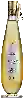
Winery SangiovanniZeII Offida Rosso
 Red wine


In the mouth this red wine is a powerful with a nice freshness.
This wine generally goes well with poultry, beef or veal.
Taste structure of the ZeII Offida Rosso from the Winery Sangiovanni
Light | Bold | |
Smooth | Tannic | |
Dry | Sweet | |
Soft | Acidic |
In the mouth the ZeII Offida Rosso of Winery Sangiovanni in the region of Marche is a powerful with a nice freshness.
Food and wine pairings with ZeII Offida Rosso
Pairings that work perfectly with ZeII Offida Rosso



Original food and wine pairings with ZeII Offida Rosso

The ZeII Offida Rosso of Winery Sangiovanni matches generally quite well with dishes of beef, pasta or veal such as recipes of braised beef with guinness, bean soup and spaghetti (traditional andalusian dish) or cocotte chicken roulades.
Details and technical informations about Winery Sangiovanni's ZeII Offida Rosso.
Discover the grape variety: Ugni
Ugni blanc is a grape variety originating from Italy. It produces a variety of grape specially used for the elaboration of wine. It is rare to find this grape to eat on our tables. This variety of grape is characterized by large bunches and small to medium sized grapes. Ugni blanc can be found in many vineyards: South West, Cognac, Bordeaux, Provence & Corsica, Rhone valley, Languedoc & Roussillon, Armagnac, Loire valley, Savoie & Bugey, Beaujolais.
Last vintages of this wine
The best vintages of ZeII Offida Rosso from Winery Sangiovanni are 0
Informations about the Winery Sangiovanni
The Winery Sangiovanni is one of of the world's great estates. It offers 23 wines for sale in the of Marche to come and discover on site or to buy online.

The wine region of Marche
Marche (or Le Marche; pronounced Mar-kay) is a region in eastern CentralItaly. It is most associated with white wines made from Trebbiano and Verdicchio grapes. Marche occupies a roughly triangular area. Its longer sides are formed by the Apennine Mountains to the west and the Adriatic Sea to the east.
The word of the wine: Reasoned (agriculture)
Conventional agriculture but concerned with limiting synthetic treatments as much as possible.