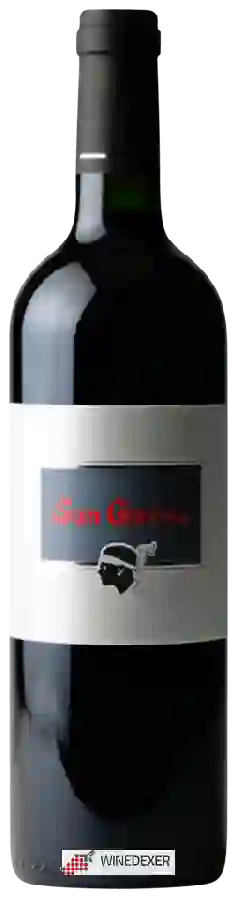
Winery San GavinoIle de Beauté Rouge
 Red wine


This wine generally goes well with beef, lamb or mature and hard cheese.
The Ile de Beauté Rouge of the Winery San Gavino is in the top 20 of wines of Ile de Beaute.
Food and wine pairings with Ile de Beauté Rouge
Pairings that work perfectly with Ile de Beauté Rouge



Original food and wine pairings with Ile de Beauté Rouge

The Ile de Beauté Rouge of Winery San Gavino matches generally quite well with dishes of veal, game (deer, venison) or rich fish (salmon, tuna etc) such as recipes of tête de veau sauce moi, aiguillette of duck normandy style or zucchini gratin with tuna and tomato.
Details and technical informations about Winery San Gavino's Ile de Beauté Rouge.
Discover the grape variety: Nielluccio
The black Nielluccio is a grape variety originating from Italy. It produces a variety of grape specially used for the elaboration of wine. It is rare to find this grape to eat on our tables. The black Nielluccio can be found in several vineyards: Provence & Corsica, South-West, Cognac, Bordeaux, Languedoc & Roussillon, Rhone Valley, Loire Valley, Savoie & Bugey, Beaujolais.
Informations about the Winery San Gavino
The Winery San Gavino is one of of the world's greatest estates. It offers 10 wines for sale in the of Ile de Beaute to come and discover on site or to buy online.

The wine region of Ile de Beaute
Ile de Beauté is the evocative PGI title given to wines that come from Corsica. The island is located in the Mediterranean Sea between the southeast coast of Provence and the west coast of Tuscany. Although the island is closer to Italy, it has been under French rule since 1764 and is one of the 27 regions of France. Corsica's Italian heritage is reflected in the island's wines, which are made primarily from Sangiovese (known here as Nielluccio) and Vermentino.
The word of the wine: Green harvest or green harvesting
The practice of removing excess bunches of grapes from certain vines, usually in July, but sometimes later. This is often necessary, but not always a good thing, as the remaining grapes tend to gain weight.