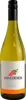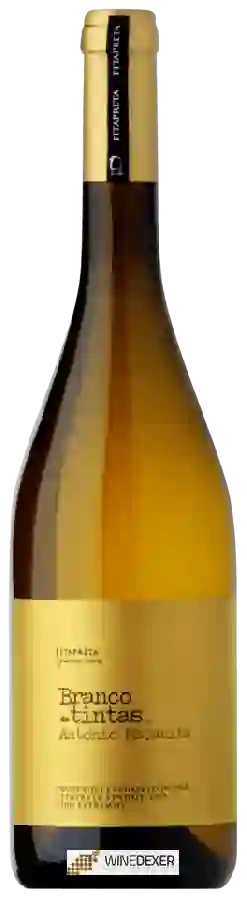
Winery FitapretaBranco de Tintas
 White wine



In the mouth this white wine is a .
This wine generally goes well with pork, lean fish or shellfish.

Taste structure of the Branco de Tintas from the Winery Fitapreta
Light | Bold | |
Dry | Sweet | |
Soft | Acidic |
In the mouth the Branco de Tintas of Winery Fitapreta in the region of Alentejano is a .
Food and wine pairings with Branco de Tintas
Pairings that work perfectly with Branco de Tintas



Original food and wine pairings with Branco de Tintas

The Branco de Tintas of Winery Fitapreta matches generally quite well with dishes of pasta, pork or shellfish such as recipes of pasta with vegetables, baeckeoffe or marco polo salad.
Details and technical informations about Winery Fitapreta's Branco de Tintas.
Discover the grape variety: Tinta negra mole
Dry, medium-dry, medium-sweet and sweet fortified Madeira wines, with an amber to mahogany hue, ample, oxidative palate and aromas of dried fruits (fig, walnut), caramel, coffee, spices and maderised rancio notes. Embodies the modern identity of the Madeira DOP appellation, accounting for over 80% of commercially sold Madeira. Portuguese black grape, the most planted on Madeira island, productive and adaptable.
Last vintages of this wine
The best vintages of Branco de Tintas from Winery Fitapreta are 2012, 0, 2008
Informations about the Winery Fitapreta
The Winery Fitapreta is one of of the world's great estates. It offers 56 wines for sale in the of Alentejano to come and discover on site or to buy online.

The wine region of Alentejano
Star of southern Portugal's great reds, sunny and opulent wines. Typical blends: round fruity Aragonez (Tempranillo), spicy Trincadeira, Touriga Nacional (black fruits, violet), deep teinturier Alicante Bouschet, juicy Castelão. Fleshy reds with notes of plum, black cherry, cocoa and sweet spices, melted tannins. Ample fresh Antão Vaz and Arinto whites.
The word of the wine: Natural sweet wine
Wine obtained by mutage with wine alcohol of the must in the course of fermentation, from the Muscat, Grenache, Macabeu and Malvoisie grape varieties, and corresponding to strict conditions of production, richness and elaboration.