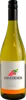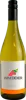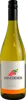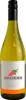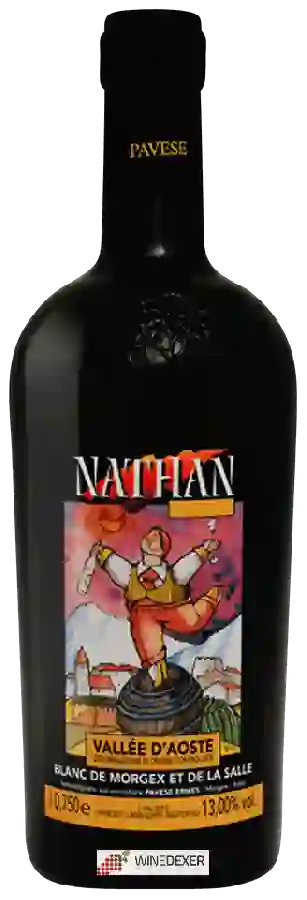
Winery Pavese ErmesNathan Blanc de Morgex et de la Salle
 White wine


In the mouth this white wine is a powerful with a nice freshness.
This wine generally goes well with lean fish, shellfish or mature and hard cheese.
The Nathan Blanc de Morgex et de la Salle of the Winery Pavese Ermes is in the top 10 of wines of Valle d'Aosta.
Taste structure of the Nathan Blanc de Morgex et de la Salle from the Winery Pavese Ermes
Light | Bold | |
Dry | Sweet | |
Soft | Acidic |
In the mouth the Nathan Blanc de Morgex et de la Salle of Winery Pavese Ermes in the region of Valle d'Aosta is a powerful with a nice freshness.
Wine flavors and olphactive analysis




On the nose the Nathan Blanc de Morgex et de la Salle of Winery Pavese Ermes in the region of Valle d'Aosta often reveals types of flavors of non oak, earth or microbio and sometimes also flavors of oak, tree fruit.
Food and wine pairings with Nathan Blanc de Morgex et de la Salle
Pairings that work perfectly with Nathan Blanc de Morgex et de la Salle



Original food and wine pairings with Nathan Blanc de Morgex et de la Salle


The Nathan Blanc de Morgex et de la Salle of Winery Pavese Ermes matches generally quite well with dishes of pasta, shellfish or mature and hard cheese such as recipes of lasagna bolognese, linguine with squid ink and cockles or goat cheese, walnut and raisin cake.
Details and technical informations about Winery Pavese Ermes's Nathan Blanc de Morgex et de la Salle.
Discover the grape variety: Mara
Intraspecific cross between gamay noir and reichensteiner obtained in 1970 by André Jacquinet at the Agroscope Changins-Wädenswil research station (Switzerland). From these same parents he also obtained the gamaret and the garanoir. It should not be confused with the Romanian direct producer hybrid, also black, resulting from an interspecific cross between 12 303 Seyve-Villard and ozana. Mara is mainly cultivated in Switzerland and is virtually unknown in France.
Last vintages of this wine
The best vintages of Nathan Blanc de Morgex et de la Salle from Winery Pavese Ermes are 2017, 2014, 2011, 0 and 2016.
Informations about the Winery Pavese Ermes
The Winery Pavese Ermes is one of of the world's greatest estates. It offers 10 wines for sale in the of Valle d'Aosta to come and discover on site or to buy online.

The wine region of Valle d'Aosta
Valle d'Aosta is the smallest and least populated region in Italy, only one-eighth the Size of neighbouring Piedmont. It covers a mountainous area in the far northwest of Italy, where the country's borders meet those of France and Switzerland. Despite the region's small size and low profile, a wide range of red and white wines are produced from a selection of native and introduced Grape varieties. The most important of these is Picotendro, the local form of Nebbiolo.
The word of the wine: Harsh
Term describing the state of tannins with an astringency that lacks finesse.