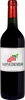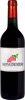
Winery Mastro BinelliRosso d'Itália
 Red wine



In the mouth this red wine is a with a nice balance between acidity and tannins.
This wine generally goes well with poultry, beef or veal.
Taste structure of the Rosso d'Itália from the Winery Mastro Binelli
Light | Bold | |
Smooth | Tannic | |
Dry | Sweet | |
Soft | Acidic |
In the mouth the Rosso d'Itália of Winery Mastro Binelli in the region of Emilia-Romagna is a with a nice balance between acidity and tannins.
Food and wine pairings with Rosso d'Itália
Pairings that work perfectly with Rosso d'Itália



Original food and wine pairings with Rosso d'Itália

The Rosso d'Itália of Winery Mastro Binelli matches generally quite well with dishes of beef, pasta or veal such as recipes of beef fillet in a crust, macaroni and cheese or italian veal roulade.
Details and technical informations about Winery Mastro Binelli's Rosso d'Itália.
Discover the grape variety: Saperavi
Originally from Georgia - Kakhetie region - where it has been cultivated for a long time. This variety is found in many countries such as Russia, Bulgaria, the Caucasus and Crimean republics, etc. Care should be taken not to confuse it with others, which are admittedly quite similar, but which bear the name Saperavi, generally followed by another name. In France, the "real Saperavi" is practically unknown, it is however registered since November 2012 in the Official Catalogue of wine grape varieties list A1.
Last vintages of this wine
The best vintages of Rosso d'Itália from Winery Mastro Binelli are 2008, 2015, 0, 2018 and 2016.
Informations about the Winery Mastro Binelli
The Winery Mastro Binelli is one of of the world's greatest estates. It offers 46 wines for sale in the of Emilia-Romagna to come and discover on site or to buy online.

The wine region of Emilia-Romagna
Romagna/emilia">Emilia-Romagna is a Rich and fertile region in Northern Italy, and one of the country's most prolific wine-producing regions, with over 58,000 hectares (143,320 acres) of vines in 2010. It is 240 kilometers (150 miles) wide and stretches across almost the entire northern Italian peninsula, sandwiched between Tuscany to the South, Lombardy and Veneto to the north and the Adriatic Sea to the east. Nine miles of Liguria is all that separates Emilia-Romagna from the Ligurian Sea, and its uniqueness as the only Italian region with both an east and west coast. Emilia-Romagna's wine-growing heritage dates back to the seventh century BC, making it one of the oldest wine-growing regions in Italy.
The word of the wine: Old vines
There are no specific regulations governing the term "vieilles vignes". After 20 to 25 years, the yields stabilize and tend to decrease, the vines are deeply rooted, and the grapes that come from them give richer, more concentrated, more sappy wines, expressing with more nuance the characteristics of their terroir. It is possible to find plots of vines that claim to be a century old.