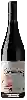
Winery La Petite BaigneuseBon Plein
 Red wine



In the mouth this red wine is a powerful with a nice balance between acidity and tannins.
This wine generally goes well with beef, veal or pasta.

Taste structure of the Bon Plein from the Winery La Petite Baigneuse
Light | Bold | |
Smooth | Tannic | |
Dry | Sweet | |
Soft | Acidic |
In the mouth the Bon Plein of Winery La Petite Baigneuse in the region of Languedoc-Roussillon is a powerful with a nice balance between acidity and tannins.
Food and wine pairings with Bon Plein
Pairings that work perfectly with Bon Plein



Original food and wine pairings with Bon Plein
The Bon Plein of Winery La Petite Baigneuse matches generally quite well with dishes of beef, pasta or veal such as recipes of roast pork with pineapple, flammekueche with munster cheese or veal cutlets au gratin.
Details and technical informations about Winery La Petite Baigneuse's Bon Plein.
Discover the grape variety: Flame seedless
Seedless (pip-free) table grape with long clusters and red-purple seedless berries, thin skin and crunchy flesh, with a balanced sweet flavour. Early-ripening and productive. Very rarely vinified. Grown in California, Australia, Chile and South Africa for export markets, one of the world's most exported table grapes, prized for its appearance and keeping quality. American black seedless grape obtained in 1973 in California by complex crossing.
Informations about the Winery La Petite Baigneuse
The Winery La Petite Baigneuse is one of of the world's greatest estates. It offers 16 wines for sale in the of Maury to come and discover on site or to buy online.

The wine region of Maury
Roussillon AOC specialising in fortified vins doux naturels (spirit-fortified), Agly valley on black schist. Signature Grenache Noir (75% min): powerful, sun-drenched sweet reds with notes of candied black cherry, blackberry, kirsch, cocoa, coffee, garrigue, dried fig and a balsamic touch, unctuous palate and long finish — from young fruity Grenat to oxidative rancio Tuilé. Also dense Maury Sec red. Perfect pairing with chocolate desserts.
The wine region of Languedoc-Roussillon
Largest single French vineyard, dominated by sunny, generous reds. Spicy Syrah, candied Grenache (ripe fruit, garrigue), structured Carignan, deep Mourvèdre, supple Cinsault. Stars: structured Corbières, Minervois, Faugères, Saint-Chinian; round Côtes-du-Roussillon. Legendary vins doux naturels: Banyuls and Maury (fortified Grenache) with notes of cocoa, fig, prune.
The word of the wine: Budding
Phase of the vegetative cycle of the vine corresponding to the bursting of the buds and the appearance of the first leaves.