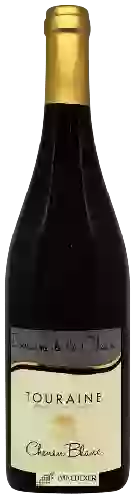
The Domaine de la Chaise of Centre Loire of Loire Valley

Domaine de la Chaise
The winery offers 13 different wines
3.9


Note - 1Note - 1Note - 1Note - 1Note - 0
Its wines get an average rating of 3.9.
It is ranked in the top 185 of the estates of Loire Valley.
It is located in Centre Loire in the region of Loire Valley
Find the Domaine de la Chaise on Facebook

The Domaine de la Chaise is one of the best wineries to follow in Centre Loire.. It offers 13 wines for sale in of Centre Loire to come and discover on site or to buy online.

Top Domaine de la Chaise wines

Looking for the best Domaine de la Chaise wines in Centre Loire among all the wines in the region? Check out our tops of the best red, white or effervescent Domaine de la Chaise wines. Also find some food and wine pairings that may be suitable with the wines from this area. Learn more about the region and the Domaine de la Chaise wines with technical and enological descriptions.

The top white wines of Domaine de la Chaise

Food and wine pairings with a white wine of Domaine de la Chaise

How Domaine de la Chaise wines pair with each other generally quite well with dishes of rich fish (salmon, tuna etc), vegetarian or poultry such as recipes of papillotes of simple salmon steaks, light tuna-tomato quiche (without cream) or chicken fajitas.

Organoleptic analysis of white wines of Domaine de la Chaise

On the nose the white wine of Domaine de la Chaise. often reveals types of flavors of pineapple, grapefruit or tropical and sometimes also flavors of citrus, apples or peach.

The best vintages in the white wines of Domaine de la Chaise

  • 2018With an average score of 4.00/5
  • 2016With an average score of 4.00/5
  • 2017With an average score of 3.90/5
  • 2013With an average score of 3.80/5
  • 2015With an average score of 3.70/5
  • 2014With an average score of 3.70/5

The grape varieties most used in the white wines of Domaine de la Chaise.

  • Sauvignon Blanc
  • Chenin Blanc

Discovering the wine region of Centre Loire

The Centre-Loire sub-region is located in the Loire Valley region, southeast of the Paris Basin. Its surface area is difficult to determine and the vineyards are made up of plots that vary in Size and are isolated, but also of plots of several hundred hectares. On a limestone base, the Centre-Loire has at least four types of soil: the terres blanches, Deep brown calcareous soils, which give the wines firmness, vivacity and fullness; the caillotes, Hard limestone soils, which give the wines pleasure, tenderness in their youth and a characteristic fruitiness; the grillotes, of friable limestone from which the wines take notes of candied fruits and honey; and the chailloux, siliceous with fine and coarse elements (clays, silts and sands, gravels, and pebbles), giving the wines firmness, persistent aromas, a Spicy nuance and a note of gunflint The caillotes and grillottes are shallow, stony soils, which Warm up quickly in the spring and have good rainwater Runoff, resulting in early ripening of the grapes for the production of fine, Soft, fruity wines. The semi-continental climate with microclimatic variations is ideal for the Sauvignon grape variety which gives white wines a rare harmony and perfection, and also ideal for the Pinot Noir which produces little known but no less surprising red wines.

The Centre-Loire region has nine appellations but is particularly well known for its AOC Sancerre, Quincy, Reuilly and Menetou-Salon. These appellations include those from the Auvergne vineyards (Saint-Pourçain, Côte-Roannaise and Côtes-du-Forez).

The top sparkling wines of Domaine de la Chaise

Food and wine pairings with a sparkling wine of Domaine de la Chaise

How Domaine de la Chaise wines pair with each other generally quite well with dishes of shellfish, lean fish or fruity desserts such as recipes of pasta shells, breton cotriade or apple cake.

The grape varieties most used in the sparkling wines of Domaine de la Chaise.

  • Chenin Blanc
  • Grolleau
  • Pineau D'Aunis
  • Gamay

Discover the grape variety: Grolleau

Grolleau noir is a grape variety that originated in France (Loire Valley). It produces a variety of grape specially used for wine making. It is rare to find this grape to eat on our tables. This variety of grape is characterized by large bunches of grapes of medium size. Grolleau noir can be found in several vineyards: Loire Valley, South West, Cognac, Bordeaux, Provence & Corsica, Rhone Valley, Armagnac, Languedoc & Roussillon.

The top red wines of Domaine de la Chaise

Food and wine pairings with a red wine of Domaine de la Chaise

How Domaine de la Chaise wines pair with each other generally quite well with dishes of lamb, pork or poultry such as recipes of mamyjaja lamb mouse tagine, pizza calzone with ham and mushrooms or chicken in red wine.

Organoleptic analysis of red wines of Domaine de la Chaise

On the nose the red wine of Domaine de la Chaise. often reveals types of flavors of earth, oak or red fruit and sometimes also flavors of floral. In the mouth the red wine of Domaine de la Chaise. is a with a nice balance between acidity and tannins.

The best vintages in the red wines of Domaine de la Chaise

  • 2017With an average score of 4.40/5
  • 2020With an average score of 4.00/5
  • 0With an average score of 4.00/5
  • 2018With an average score of 3.93/5
  • 2014With an average score of 3.80/5

The grape varieties most used in the red wines of Domaine de la Chaise.

  • Malbec
  • Cabernet Franc
  • Gamay

The word of the wine: Tressallier

White grape variety from the Allier region, identical to the Sacy variety grown in Burgundy. Rarely vinified on its own, it is used in the blending of Saint-Pourçain white wines, associated with chardonnay, the main grape variety of the appellation. Syn.: sacy.

The top pink wines of Domaine de la Chaise

Food and wine pairings with a pink wine of Domaine de la Chaise

How Domaine de la Chaise wines pair with each other generally quite well with dishes of beef, pork or game (deer, venison) such as recipes of beef fashion, english breakfast or rabbit with chorizo.

Organoleptic analysis of pink wines of Domaine de la Chaise

On the nose the pink wine of Domaine de la Chaise. often reveals types of flavors of tree fruit, citrus fruit.

The best vintages in the pink wines of Domaine de la Chaise

  • 2018With an average score of 4.10/5
  • 2017With an average score of 3.40/5

The grape varieties most used in the pink wines of Domaine de la Chaise.

  • Cabernet Franc
  • Gamay
  • Grolleau
  • Pineau D'Aunis

Discover the grape variety: Sauvignon blanc

Originally from Bordeaux, Sauvignon, or Sauvignon Blanc, is reputed to be one of the best French grape varieties for white wine. It is a white grape variety, not to be confused with Sauvignon Gris and its pale yellow color, or with Cabernet Sauvignon which produces red wines. Particularly famous thanks to Sancerre, Sauvignon Blanc is cultivated as far as New Zealand, where it produces great wines whose reputation is well established.

Discover other wineries and winemakers neighboring the Domaine de la Chaise

Planning a wine route in the of Centre Loire? Here are the wineries to visit and the winemakers to meet during your trip in search of wines similar to Domaine de la Chaise.

Discover the grape variety: Cabernet franc

Cabernet Franc is one of the oldest red grape varieties in Bordeaux. The Libourne region is its terroir where it develops best. The terroirs of Saint-Emilion and Fronsac allow it to mature and develop its best range of aromas. It is also the majority in many blends. The very famous Château Cheval Blanc, for example, uses 60% Cabernet Franc. The wines produced with Cabernet Franc are medium in colour with fine tannins and subtle aromas of small red fruits and spices. When blended with Merlot and Cabernet Sauvignon, it brings complexity and a bouquet of aromas to the wine. It produces fruity wines that can be drunk quite quickly, but whose great vintages can be kept for a long time. It is an earlier grape variety than Cabernet Sauvignon, which means that it is planted as far north as the Loire Valley. In Anjou, it is also used to make sweet rosé wines. Cabernet Franc is now used in some twenty countries in Europe and throughout the world.