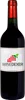
Winery L'AcinoSputnik 1
 Red wine



In the mouth this red wine is a powerful with a lot of tannins present in the mouth.
This wine generally goes well with beef, lamb or pasta.
Taste structure of the Sputnik 1 from the Winery L'Acino
Light | Bold | |
Smooth | Tannic | |
Dry | Sweet | |
Soft | Acidic |
In the mouth the Sputnik 1 of Winery L'Acino in the region of Calabria is a powerful with a lot of tannins present in the mouth.
Wine flavors and olphactive analysis

Food and wine pairings with Sputnik 1
Pairings that work perfectly with Sputnik 1



Original food and wine pairings with Sputnik 1
The Sputnik 1 of Winery L'Acino matches generally quite well with dishes of beef, pasta or lamb such as recipes of thai beef curry, lasagne simplissimo or mansaf, or jordanian lamb (jordan).
Details and technical informations about Winery L'Acino's Sputnik 1.
Discover the grape variety: Muscat rge de Madère
A very old variety of table grape that is now almost extinct. It can still be found in Italy, Portugal, Romania, Moldavia, ... in France, it can only be found among amateur gardeners and/or collectors. It is given as originating from Portugal, others from Romania. D.N.A. analyses carried out in 2007 allow us to confirm that it is indeed a natural intraspecific cross between the muscat à petits grains blancs and the sciaccarello or mammolo nero.
Last vintages of this wine
The best vintages of Sputnik 1 from Winery L'Acino are 0
Informations about the Winery L'Acino
The Winery L'Acino is one of of the world's greatest estates. It offers 16 wines for sale in the of Calabria to come and discover on site or to buy online.

The wine region of Calabria
Calabria is a wine region in southern Italy, in fact a large peninsula that juts out between the Ionian Sea and the Tyrrhenian Sea. It is separated from Sicily by the narrow Strait of Messina. Its northern border with Basilicata is marked by the peaks of the southern Apennines. Calabria and its wines have undergone many influences over the centuries.
The word of the wine: Residual sugars
Sugars not transformed into alcohol and naturally present in the wine. The perception of residual sugars is conditioned by the acidity of the wine. The more acidic the wine is, the less sweet it will seem, given the same amount of sugar.