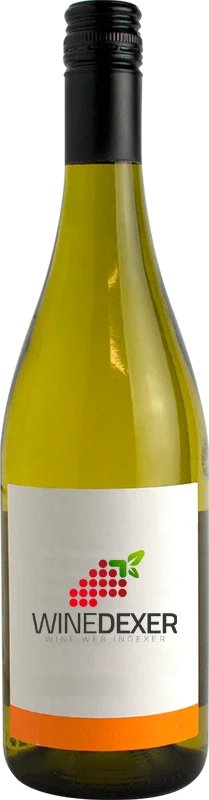
Winery Kanakaris10³ Malagousia
 White wine



In the mouth this white wine is a powerful with a nice freshness.
This wine generally goes well with vegetarian, poultry or lean fish.
Taste structure of the 10³ Malagousia from the Winery Kanakaris
Light | Bold | |
Dry | Sweet | |
Soft | Acidic |
In the mouth the 10³ Malagousia of Winery Kanakaris in the region of Peloponnesos is a powerful with a nice freshness.


Food and wine pairings with 10³ Malagousia
Pairings that work perfectly with 10³ Malagousia



Original food and wine pairings with 10³ Malagousia


The 10³ Malagousia of Winery Kanakaris matches generally quite well with dishes of pasta, mature and hard cheese or vegetarian such as recipes of spaghetti with squid ink (italy), truffle with cantal and saint-nectaire cheese or goat cheese and bacon quiche.
Details and technical informations about Winery Kanakaris's 10³ Malagousia.
Discover the grape variety: Gamaret
Gamaret noir is a grape variety that originated in Switzerland. It produces a variety of grape specially used for the elaboration of wine. It is rare to find this grape to eat on our tables. This variety of vine is characterized by medium-sized bunches, and grapes of medium size. Gamaret noir can be found in many vineyards: South-West, Cognac, Bordeaux, Loire Valley, Burgundy, Jura, Champagne, Beaujolais, Provence & Corsica, Rhone Valley, Savoie & Bugey, Languedoc & Roussillon.
Last vintages of this wine
The best vintages of 10³ Malagousia from Winery Kanakaris are 0
Informations about the Winery Kanakaris
The Winery Kanakaris is one of of the world's greatest estates. It offers 19 wines for sale in the of Peloponnesos to come and discover on site or to buy online.

The wine region of Peloponnesos
The Peloponnese Peninsula (Peloponnesus) is a large landform on the southern edge of continental Greece. Covered in mountains, rugged plateaus and valleys, the area has an abundance of mesoClimates and terroirs suitable for premium viticulture. Native Grape varieties such as Agiorgitiko, Moschofilero and Mavrodaphne are planted throughout the peninsula. They produce everything from fresh, minerally white wines to Rich, ageworthy reds.
The word of the wine: Vintage (champagne)
It is a champagne made from a single harvest. In principle, we only vintage the great years: 1988, 1990, 1995, 1996... We find more often, now, the very good 2002, and the 2004, a little short.