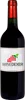
Winery Juan GilCastillo de Zalin Monastrell
 Red wine



In the mouth this red wine is a powerful with a nice balance between acidity and tannins.
This wine generally goes well with beef, game (deer, venison) or lamb.
Taste structure of the Castillo de Zalin Monastrell from the Winery Juan Gil
Light | Bold | |
Smooth | Tannic | |
Dry | Sweet | |
Soft | Acidic |
In the mouth the Castillo de Zalin Monastrell of Winery Juan Gil in the region of Murcie is a powerful with a nice balance between acidity and tannins.
Wine flavors and olphactive analysis



On the nose the Castillo de Zalin Monastrell of Winery Juan Gil in the region of Murcie often reveals types of flavors of non oak, earth or oak and sometimes also flavors of spices, red fruit or black fruit.
Food and wine pairings with Castillo de Zalin Monastrell
Pairings that work perfectly with Castillo de Zalin Monastrell



Original food and wine pairings with Castillo de Zalin Monastrell

The Castillo de Zalin Monastrell of Winery Juan Gil matches generally quite well with dishes of beef, pasta or lamb such as recipes of beef with dark beer, lasagne with salmon, goat cheese and spinach or couscous without couscous maker.
Details and technical informations about Winery Juan Gil's Castillo de Zalin Monastrell.
Discover the grape variety: Rondo
An interspecific cross between Zarya Severa (Sayanets Malengra x Amurensis) - a Russian variety - and Saint Laurent, obtained in 1964 by Vilem Kraus (Czech Republic) and then tested at the Geisenheim Research Institute (Germany). It can be found in Germany, Denmark, the Netherlands, Belgium, England, Ireland and Switzerland, but is virtually unknown in France.
Last vintages of this wine
The best vintages of Castillo de Zalin Monastrell from Winery Juan Gil are 2017, 0, 2019
Informations about the Winery Juan Gil
The Winery Juan Gil is one of of the world's great estates. It offers 61 wines for sale in the of Jumilla to come and discover on site or to buy online.

The wine region of Jumilla
The wine region of Jumilla is located in the region of Murcie of Spain. Wineries and vineyards like the Domaine Bodegas El Nido or the Domaine Bodegas El Nido produce mainly wines red, white and pink. The most planted grape varieties in the region of Jumilla are Cabernet-Sauvignon, Tempranillo and Petit Verdot, they are then used in wines in blends or as a single variety. On the nose of Jumilla often reveals types of flavors of oak, orange blossom or honeysuckle and sometimes also flavors of stone fruit, grass or jasmine.
The wine region of Murcie
Murcia is one of the smallest and least known regions in Spain. Nestled in the extreme Southeast of the country, it is bordered by Andalusia to the west, Castilla-La Mancha to the North, Valencia to the east and the Mediterranean Sea to the south. This small administrative region consists of a single province and an administrative centre that share the same name. As far as wine is concerned, Murcia has three designations of origin.
The word of the wine: Density per hectare
Number of vines per hectare. For the same yield, a vine planted with 3,000 vines per hectare bears many more bunches (per vine) than a vine planted with 10,000. The grapes will therefore be less rich in sugar and polyphenols (tannins, aromas...).