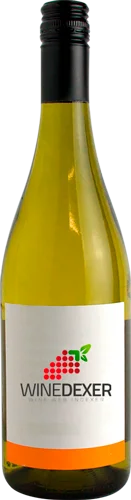
The Winery Jomini of Vaud

The Winery Jomini is one of the best wineries to follow in Vaud.. It offers 15 wines for sale in of Vaud to come and discover on site or to buy online.
Looking for the best Winery Jomini wines in Vaud among all the wines in the region? Check out our tops of the best red, white or effervescent Winery Jomini wines. Also find some food and wine pairings that may be suitable with the wines from this area. Learn more about the region and the Winery Jomini wines with technical and enological descriptions.
How Winery Jomini wines pair with each other generally quite well with dishes of pork, rich fish (salmon, tuna etc) or vegetarian such as recipes of baeckeoffe, salmon à la plancha with vegetables or salmon and goat cheese quiche.
On the nose the white wine of Winery Jomini. often reveals types of flavors of citrus, citrus fruit or earth and sometimes also flavors of microbio, tropical fruit. In the mouth the white wine of Winery Jomini. is a with a nice freshness.
Vaud is Switzerland's second-largest wine region, located in the French-speaking southwest. The region - which is also one of 26 cantons in the country - is best known for its crisp, white Fendant wines (the national name for the Chasselas variety) and its stunning lakeside landscapes.
Both of these reach their zenith in the grand crus of Lavaux/dezaley">Dezaley and Calamin. These famous Lavaux Vineyard terraces, which rise steeply up above Lake Geneva (Lac Léman), are considered of such importance that they are now enjoy protected status as a UNESCO World Heritage Site.
The main Vaud vineyard area arches broadly around Lake Geneva from La Côte, west of Lausanne, via Lavaux (between Lausanne and Montreux to the east) to Chablais, which runs from the lake's edge into the steep-sided Rhone river valley - the gateway to the Valais.
North of the lake are a handful of satellite viticultural areas around Lake Neuchâtel, bordering the Neuchatel - Three Lakes area, and along the banks of the Orbe river - grouped into the Côtes de l'Orbe and BonvillarsAOC/AOPs.
Vaud is thus flanked by three key Swiss wine regions: Geneva (at the end of the lake to the southwest), Neuchâtel (to the north) and Valais (to the southeast). Just across the Jura Mountains, which form the canton's western edge (the Swiss border with France) is the French portion of the Jura.
Unusually among Swiss wine regions, Vaud produces more white wine than red. Two-thirds of production here is to white wine with the lion's share given over to Fendant/Chasselas, covering just over 2,200 hectares (5,400 acres) in the canton - 60 percent of its area.
Other than Chasselas, Pinot Noir and Gamay are the next in line in terms of vineyard area, making up just over 20 percent of vineyard area together. Of the two, Pinot Noir is the more popular, boasting 480 hectares (1,100 acres) compared to Gamay's 350 (860 acres).
How Winery Jomini wines pair with each other generally quite well with dishes of beef, game (deer, venison) or lamb such as recipes of tibs (ethiopia), pizza of the south west : duck breast, roquefort or lamb tagine with apricots (morocco).
In the mouth the red wine of Winery Jomini. is a with a nice freshness.
Intraspecific cross between Gamay and Reichensteiner obtained in 1970 by André Jacquinet at the Agroscope Changins-Wädenswil research station (Switzerland). From this same crossbreed, Gamaret and Mara were also born.
How Winery Jomini wines pair with each other generally quite well with dishes of veal, pork or game (deer, venison) such as recipes of veal grenadin with balsamic vinegar and honey, old-fashioned pork roll or alsatian wine pie.
Said of a wine whose taste and aromas are reminiscent of spices.
How Winery Jomini wines pair with each other generally quite well with dishes of rich fish (salmon, tuna etc), shellfish or spicy food such as recipes of pumpkin and tuna gratin, marinated mussels with parsley or thai basil chicken.
White muscat is a white grape variety of Greek origin. Present in several Mediterranean vineyards, it has several synonyms such as muscat de Die, muscat blanc and frontignac. In France, it occupies a little less than 7,000 ha out of a total of 45,000 ha worldwide. Its young shoots are downy. Its youngest leaves are shiny, bronzed and scabrous. The berries and bunches of this variety are all medium-sized. The flesh of the berries is juicy, sweet and firm. Muscat à petits grains has a second ripening period and buds early in the year. It is moderately vigorous and must be pruned short. It likes poor, stony slopes. This variety is often exposed to spring frosts. It fears mildew, wasps, grape worms, court-noué, grey rot and powdery mildew. Muscat à petits grains is used to make rosé wines and dry white wines. Orange, brown sugar, barley sugar and raisins are the known aromas of these wines.
Planning a wine route in the of Vaud? Here are the wineries to visit and the winemakers to meet during your trip in search of wines similar to Winery Jomini.
Intraspecific crossing between the madeleine angevine and the dyer of Cher obtained in 1928 by Gustav Adolf (1847/1912) of the Research Institute in Geinsenheim (Germany). We can meet it certainly in Germany but also in Belgium, in Switzerland, in England, in the United States, in Canada... almost unknown in France. It should not be confused with the dornfelder, also of German origin.