The Cave Saint-Mathieu of Valais
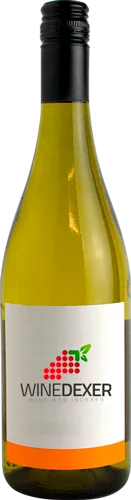
The Cave Saint-Mathieu is one of the best wineries to follow in Valais.. It offers 23 wines for sale in of Valais to come and discover on site or to buy online.
Looking for the best Cave Saint-Mathieu wines in Valais among all the wines in the region? Check out our tops of the best red, white or effervescent Cave Saint-Mathieu wines. Also find some food and wine pairings that may be suitable with the wines from this area. Learn more about the region and the Cave Saint-Mathieu wines with technical and enological descriptions.
How Cave Saint-Mathieu wines pair with each other generally quite well with dishes of pork, shellfish or rich fish (salmon, tuna etc) such as recipes of alsatian sauerkraut, paella from an old spanish grandmother... or baked salmon mediterranean style.
On the nose the white wine of Cave Saint-Mathieu. often reveals types of flavors of earth, oak or tree fruit and sometimes also flavors of tropical fruit. In the mouth the white wine of Cave Saint-Mathieu. is a with a nice freshness.
The Valais is the largest wine region and appellation in Switzerland, responsible for around one third of the country's total wine production. The main Vineyard area covers the southeast-facing slopes of the dramatic Rhône river valley as the glacial waters run southwest between Leuk (Loeche in French) and Fully. The river changes direction at Martigny and then runs northwest to exit the valley and empty into Lac Léman (Lake Geneva).
Vineyard area here comes to around 4,800 hectares (11,800 acres) and is generally located on (often steep) slopes and terraces between the flat, fertile, Heavy soils at the bottom of the valley - often given over to fruit production, industry and urban development - and the bare rock of the mountainside that towers above.
The Valais Terroir is one of the world's most dramatic. The valley benefits from its sheltered position below the high alpine peaks, with the most obvious bonus being the fohn wind, which keeps the area unusually Warm and Dry considering its altitude (most vines grow here at between 460 and 760m - 1500-2500ft).
The fohn effect is also enjoyed by Ticino, although there, mountain weather systems bring sporadic, heavy rainfall.
Vertiginous alpine topography also gives the vines in Valais the advantage of emphasized vineyard orientation and many are planted on steep gradients of up to 90% (42 degrees).
This steepness, although making it markedly harder to manage and harvest the vines, brings the significant benefits of excellent drainage and increased exposure to sunlight.
Production is centered around the towns and villages that run aLong the 50km (30 mile) section of the valley from Martigny in the southwest to Leuk, northeast. It is not unusual to see labels mention both variety and town, such as "Amigne de Vétroz" or "Fendant de Sion".
This commune-based labelling convention is a reasonably widespread Swiss quirk as most appellations in the country follow broad, cantonal boundaries yet allow the name of the commune (sometimes even cadastral names and "lieu-dits") on the label.
How Cave Saint-Mathieu wines pair with each other generally quite well with dishes of beef, veal or pork such as recipes of monkfish with vegetable tagliatelle, pork tenderloin with chorizo and peppers or stuffed mushrooms.
On the nose the red wine of Cave Saint-Mathieu. often reveals types of flavors of earth, spices or red fruit. In the mouth the red wine of Cave Saint-Mathieu. is a with a nice freshness.
Originally from Bordeaux, Sauvignon, or Sauvignon Blanc, is reputed to be one of the best French grape varieties for white wine. It is a white grape variety, not to be confused with Sauvignon Gris and its pale yellow color, or with Cabernet Sauvignon which produces red wines. Particularly famous thanks to Sancerre, Sauvignon Blanc is cultivated as far as New Zealand, where it produces great wines whose reputation is well established.
How Cave Saint-Mathieu wines pair with each other generally quite well with dishes of beef, veal or pork such as recipes of traditional flemish carbonades, traditional veal stew or green lentils strasbourg style.
Number of vines per hectare. For the same yield, a vine planted with 3,000 vines per hectare bears many more bunches (per vine) than a vine planted with 10,000. The grapes will therefore be less rich in sugar and polyphenols (tannins, aromas...).
Planning a wine route in the of Valais? Here are the wineries to visit and the winemakers to meet during your trip in search of wines similar to Cave Saint-Mathieu.
Savagnin is a white grape variety originating from the Austrian Tyrol. It arrived in Franche Comté and quickly became the flagship variety of the Jura. Cousin of the gewurztraminer, it gives small white bunches. Its berries have a thick skin which resists well to grey rot and to diseases in general. Savagnin thrives on marl soils and is a very aromatic grape variety. It is used in the elaboration of yellow wine, the AOC Château-Châlon is the most representative. This grape variety also produces vin de paille which is a sweet wine for which the ripe grapes are dried on a bed of straw for at least 6 weeks before being pressed. The best known AOC straw wines are: Arbois, Côtes-du-Jura and Etoile. Savagnin is also used to make Macvin du Jura, a liqueur wine, and to make Crémants du Jura.White wines made from Savagnin have great aging potential. They have a powerful and complex aroma with notes of walnut, almonds, hazelnuts, flowers, honey and green apple.